Pranav Hotkar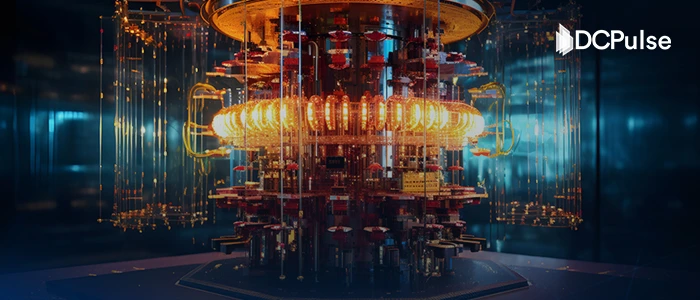
Quantum computing is no longer a distant lab experiment; it’s beginning to cast a long shadow over today’s data center decisions. While fault-tolerant, large-scale quantum systems are still years away, their arrival will not be a software-only event. The shift will test power density limits, thermal design assumptions, security models, and interconnect architectures that were built for classical compute.
For data center operators, the question isn’t when quantum computing becomes mainstream. It’s whether facilities being designed today will be flexible enough to support the infrastructure changes quantum-era workloads will demand tomorrow, without costly retrofits or stranded assets.
This is where the idea of quantum-ready infrastructure takes shape: not as a bet on speculative hardware, but as a disciplined approach to future-proofing data centers for new compute modalities, tighter latency coupling, and fundamentally different operational requirements.
Where Data Center Infrastructure Stands in the Quantum Transition
Quantum computing today remains on the cusp of practical use, but its implications for data centers are already shaping infrastructure planning. Current quantum systems are largely confined to research labs and specialized facilities, and full-scale, fault-tolerant quantum computers suitable for widespread enterprise deployment are still the subject of long-term roadmaps.
Major players like IBM are targeting fault-tolerant systems by the end of the decade, though these systems remain prototypes with significant engineering gaps to bridge before broader adoption.
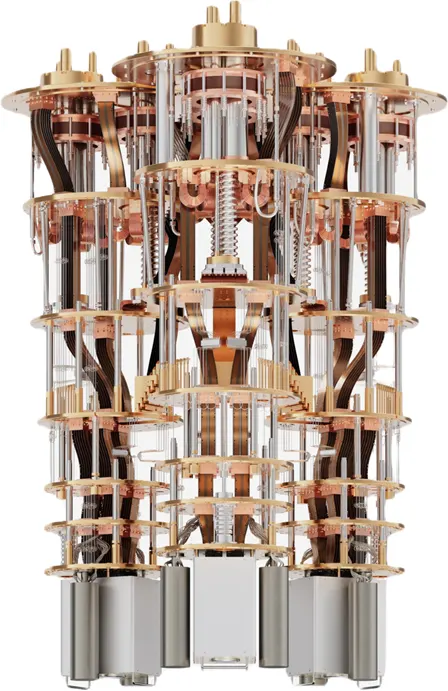
Despite this early stage, the promise of quantum, especially hybrid quantum-classical workflows, is prompting operators and designers to rethink classical infrastructure assumptions. Industry analysis notes that quantum devices require environments vastly different from traditional racks: they need ultra-stable power, cryogenic cooling, isolation from vibration and electromagnetic noise, and tailored network support to connect quantum processing units with classical systems
Comparative Infrastructure: Traditional vs. Quantum-Ready Zones
Current data center landscapes still prioritize classical compute and AI workloads, and most facilities are not equipped for quantum hardware’s unique requirements. Instead, operators explore modular and flexible designs that allow for incremental upgrades without disruptive overhauls.
Hybrid quantum-classical architectures, where quantum accelerators support select subroutines while classical systems handle general workloads, are anticipated to dominate early adoption, meaning quantum readiness often starts with adjacency rather than full integration.
On the security front, data centers are beginning to prepare for post-quantum threats. National standards bodies like NIST have already released quantum-resistant cryptography standards, signaling that future infrastructure must integrate operational hardware planning with secure, quantum-safe practices long before quantum machines arrive.
Infrastructure and Post-Quantum Cryptography Adoption Timeline

Today’s data centers are not “quantum hubs” yet, but they are moving from reactive speculation toward strategic readiness, balancing classical performance with the ability to accommodate the coming era of hybrid and quantum workloads.
How Infrastructure Is Being Built for Quantum Readiness
Quantum readiness is beginning to influence data center design not through wholesale transformation, but through selective, infrastructure-level innovation. One of the most visible shifts is the emergence of segmented facility layouts.
Quantum hardware, particularly superconducting systems, demands cryogenic cooling, vibration isolation, and electromagnetic shielding that cannot coexist inside conventional data halls. As a result, operators are exploring dedicated zones or annexes that sit adjacent to classical HPC or AI clusters rather than inside them, preserving operational stability while enabling tight coupling.
A second innovation is modular quantum integration. Instead of retrofitting entire buildings, infrastructure teams are evaluating prefabricated, self-contained quantum pods that can be deployed as demand materializes. These modules are designed around precision power delivery, cryogenic support systems, and specialized flooring, allowing data centers to experiment with quantum infrastructure without disrupting existing operations.
Finally, innovation is also occurring at the security layer. With NIST finalizing post-quantum cryptography standards, data centers are beginning to adopt hybrid cryptographic models to protect long-lived data against future quantum-enabled attacks, well before quantum computers are operational at scale.
How Operators and Vendors Are Quietly Preparing for Quantum Integration
While quantum computing remains largely pre-commercial, several infrastructure players are already taking concrete steps that signal how data centers may adapt. Cloud providers are leading this transition by anchoring quantum systems within hybrid classical environments, rather than standalone facilities.
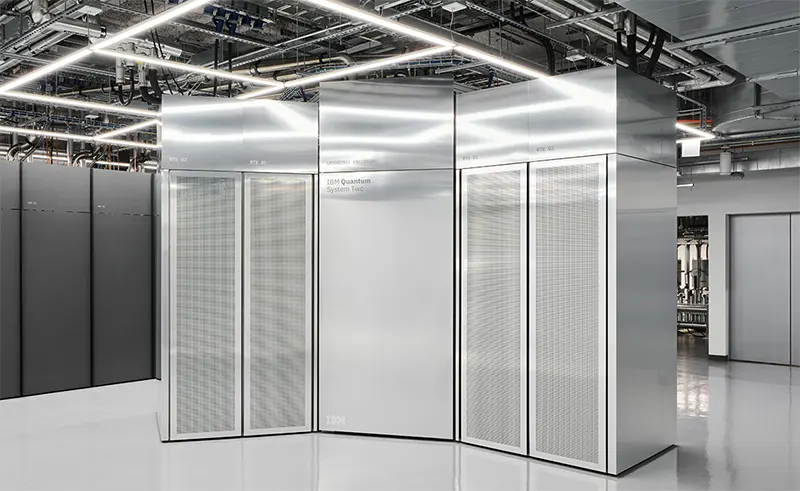
IBM, for example, continues to deploy quantum systems alongside classical HPC infrastructure, reinforcing the model where quantum processors operate as tightly coupled accelerators rather than isolated machines.
Hyperscale cloud platforms are also shaping expectations. Amazon Web Services and Microsoft Azure have both positioned quantum services as cloud-accessible resources, reinforcing the need for data centers that can support low-latency integration, specialized power conditioning, and secure interconnects without redesigning entire campuses.
Beyond compute providers, standards bodies and security agencies are influencing infrastructure decisions. NIST’s finalization of post-quantum cryptography standards is already driving upgrades to data center security stacks, particularly for facilities hosting sensitive, long-retention data.
Preparing for Quantum Without Overbuilding for It
Quantum-ready infrastructure is less about predicting when large-scale quantum computing arrives and more about avoiding rigidity in today’s data center designs. The facilities being planned now will likely outlive the first generation of practical quantum systems, making adaptability more valuable than early adoption.
For operators, the near-term focus is clear. Designing campuses with segmented layouts, reserving space for specialized environments, and maintaining modular expansion paths reduces long-term risk. Quantum workloads, at least initially, are expected to operate as accelerators alongside classical and AI systems, not as replacements, reinforcing the importance of proximity, low-latency interconnects, and stable power delivery rather than dedicated quantum-only facilities.
Security planning is equally immediate. With post-quantum cryptography standards now finalized, data centers hosting sensitive or long-retention data can no longer afford to treat quantum risk as theoretical. Infrastructure and security roadmaps must move in parallel, ensuring facilities are ready for cryptographic transitions well before quantum hardware reaches scale.
Ultimately, quantum readiness is not a separate strategy; it is an extension of good infrastructure discipline. Data centers that prioritize flexibility, modularity, and security resilience today will be best positioned to integrate quantum capabilities tomorrow, without costly redesigns or operational disruption.