Pranav Hotkar
The jump from HD to 4K felt inevitable. The leap to 8K does not.
It arrives quietly, inside production studios, design labs, simulation clusters, and post-processing pipelines, long before it shows up on living-room screens.
Yet the infrastructure strain is already visible. File sizes multiply. Render times stretch. Network margins shrink. Storage architectures that felt generous a few years ago now look brittle.
What’s unfolding isn’t just a story about sharper pixels. It’s a story about whether today’s compute, network, and data center foundations are built to absorb resolution growth that doesn’t scale linearly. As 8K pushes into professional workflows and “beyond” becomes a serious engineering discussion, the real question shifts away from displays and toward the invisible systems underneath that must carry the weight.
Where 8K Stands Today
Despite the consumer buzz around 8K, it remains largely a professional and infrastructure-driven reality rather than a mass-market delivery format. In film and broadcast production, 8K workflows are used for oversampling, reframing, and archival quality. Still, the infrastructure required to handle raw or lightly compressed 8K video is already stressing existing systems.
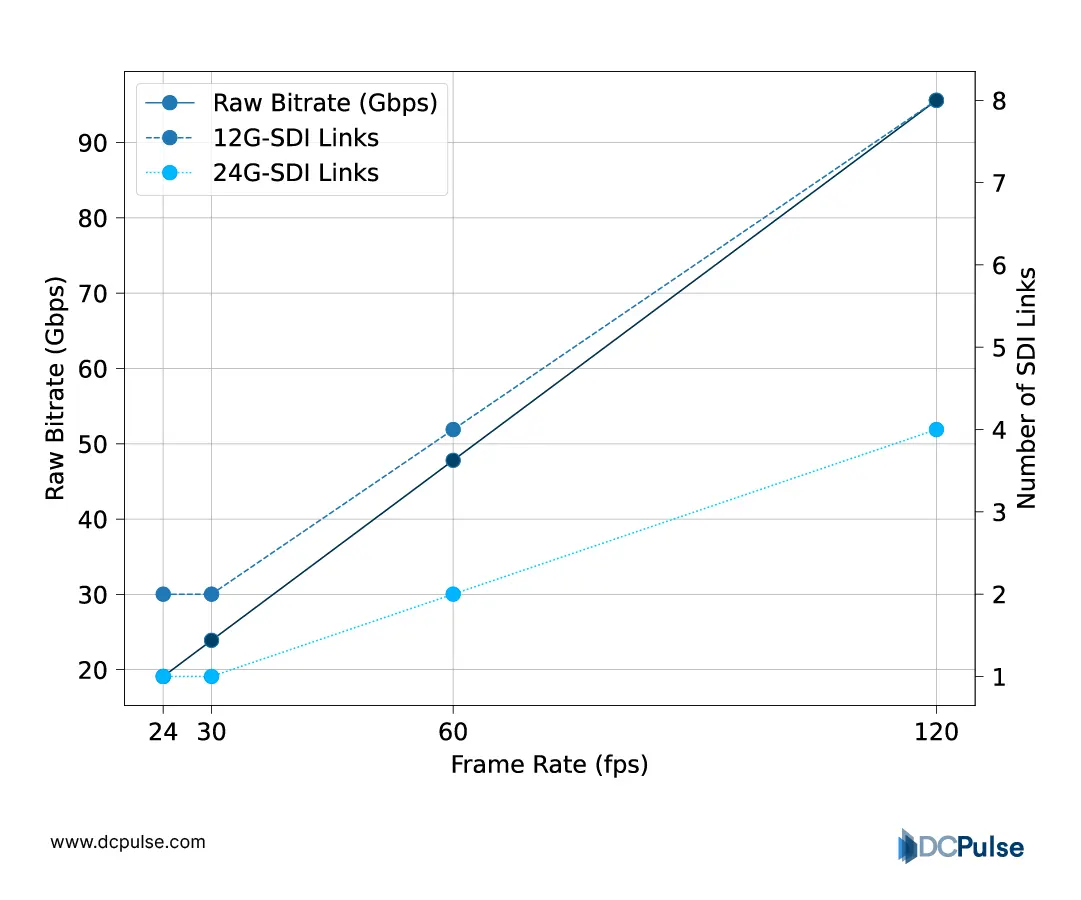
Uncompressed 8K video, for example, at 4320p and 60 fps, can easily demand tens of gigabits per second of data throughput, making traditional HD and 4K pipelines look modest by comparison. In professional video transport, uncompressed 8K signals are typically carried using multiple 12G-SDI links because single interfaces cannot handle the raw data rate on their own.
8K Uncompressed Data Rates & SDI Link Requirements
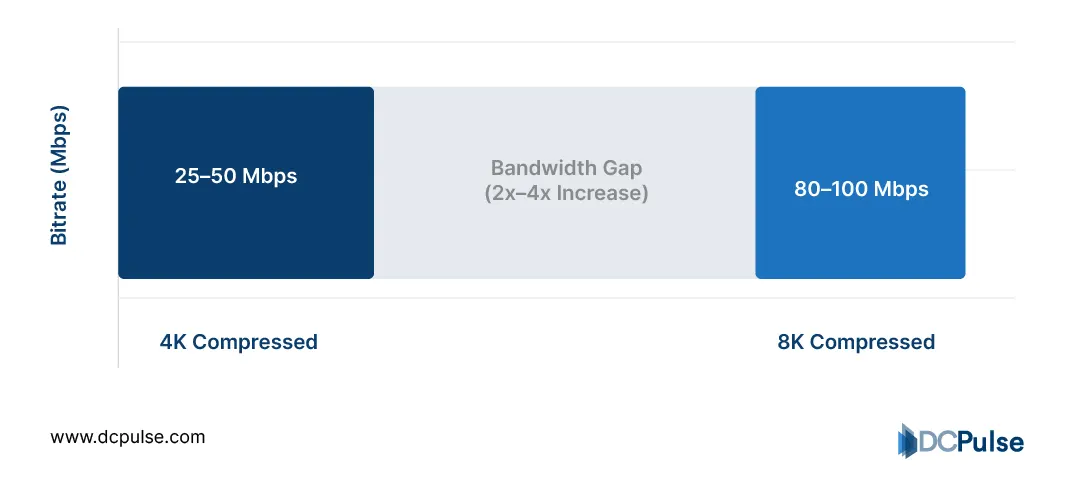
Compression partially mitigates bandwidth requirements, but even commercially optimized codecs require around 80-100 Mbps for compressed 8K streams, far higher than the 25-50 Mbps typical of 4K delivery today. This bandwidth demand places real stress on network infrastructure, particularly when scale and real-time delivery are needed.
Bandwidth Comparison - 4K vs 8K compressed stream bitrates
Storage and processing are likewise nontrivial. For high-quality 8K production, intermediate files can reach multi-terabyte sizes, and rendering or playback workflows depend on NVMe SSDs and high-bandwidth interconnects. These needs push professional environments toward 10 GbE and higher networking, as Gigabit Ethernet is insufficient for real-time collaboration.
At the same time, consumer broadband infrastructure is not yet widely capable of sustaining native 8K delivery. Many regions still struggle to reliably support consistent 4K streaming, let alone the elevated bandwidths implied by large-scale 8K services.
Taken together, these patterns show that 8K is already real where infrastructure must scale, even if broad distribution remains limited, setting the stage for deeper innovation in transport, compute, and storage layers.
What Must Change in Infrastructure for 8K (and Beyond) to Scale?
To make 8K and future ultra-high resolutions practical outside of controlled environments, infrastructure innovation is already underway, especially in how video is compressed, processed, and moved.
A foundational area of innovation is next-generation video compression standards. Versatile Video Coding (VVC), also known as H.266, was developed specifically to support ultra-high-resolution content with significantly better compression than its predecessor. This means operators can carry 8K video using roughly half the data required by older codecs while maintaining quality, a key enabler for scalable transmission and storage.
Real-world tests of 8K live transmission using VVC demonstrate how this efficiency makes high-resolution workflows more feasible on existing network infrastructure.
Another innovation path comes from enhancement layering technologies like Low Complexity Enhancement Video Coding (LCEVC), which works with existing base codecs to boost overall efficiency and reduce processing demands without requiring entirely new decoder hardware. This approach lets service providers improve performance on legacy infrastructure while supporting higher resolutions.
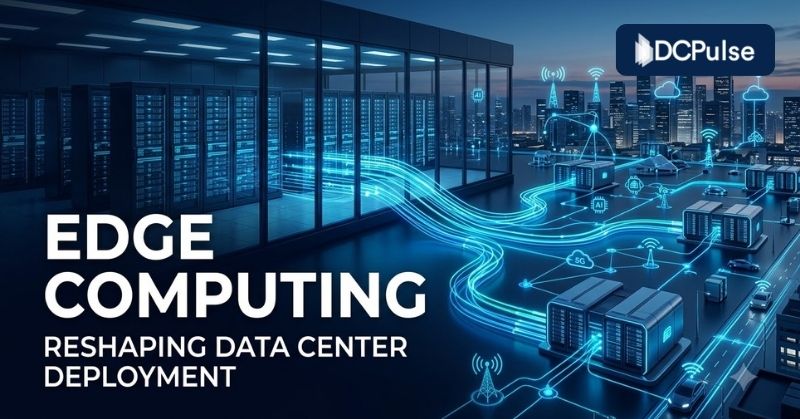
Edge and cloud integration is reshaping how 8K content is processed and delivered. By distributing workloads closer to capture and playback points, such as using edge servers for initial encoding and adaptive streaming decisioning before sending content to central cloud nodes, providers can manage throughput spikes and reduce central bottlenecks. This architecture is starting to appear in media distribution and immersive applications, especially where latency sensitivity is critical.
Emerging industry collaborations are also looking beyond current codecs. Partnerships between major networks and research institutions to develop next-generation video standards for beyond-8K and immersive media, tied to future connectivity technologies like 6G, point to a continuing evolution of infrastructure capabilities.
These innovations, collectively, are breaking the bottlenecks that once confined 8K to niche use cases and building the infrastructure foundation for even higher resolutions to come.
Who Is Building for 8K-Scale Workloads?
The movement toward 8K is no longer experimental; it’s backed by concrete industry investments across content production, data center infrastructure, and networking.
Broadcast and media leaders are among the first to operationalize 8K workflows. NHK, the Japanese public broadcaster, continues to pioneer 8K television production, building dedicated 8K-ready studios, storage, and transmission networks that can handle tens of gigabits per second of uncompressed video. These environments integrate high-density GPU compute clusters and advanced codecs to maintain quality while enabling live production.
Cloud and hyperscale players are also making moves. Companies like AWS and Microsoft Azure are expanding GPU-accelerated and high-bandwidth storage solutions designed for media rendering, simulation, and 8K content workflows, allowing production studios to burst into the cloud during peak workloads without over-provisioning on-premises infrastructure.
On the networking front, telecom operators are trialing ultra-high-bandwidth links and optical interconnects to support multi-gigabit flows between studios, data centers, and edge locations. Ericsson and Nokia have recently partnered with research institutions to test next-generation 6G-capable video transmission standards, positioning networks to handle the throughput that 8K and beyond will demand.
Meanwhile, storage vendors are developing NVMe-over-Fabrics architectures and tiered high-speed storage arrays specifically to cope with the massive ingest and playback requirements of 8K video production. These arrays prioritize parallel access and low-latency throughput over sheer capacity, reflecting a strategic shift from “more storage” to “smarter storage.”
Collectively, these moves demonstrate a multi-layered industry response: production studios, cloud providers, network operators, and storage vendors are all investing in aligned infrastructures, proving that 8K adoption is moving from experimental pilots toward operational reality.
Preparing for the 8K Future
The evolution toward 8K and beyond is no longer hypothetical; it is actively reshaping how studios, data centers, and networks plan capacity. For infrastructure leaders, the first takeaway is clear: scaling for ultra-high resolutions requires a holistic approach. Investments in next-generation codecs, heterogeneous compute, and high-speed, low-latency interconnects are foundational, not optional.
Second, flexibility and modularity matter. Workloads will vary across production, simulation, and distribution pipelines, so infrastructures that allow cloud bursting, tiered storage, and edge processing offer both resilience and cost-efficiency. Organizations that adopt adaptive, software-defined models will absorb resolution growth with less operational friction.
Finally, collaboration across the ecosystem is critical. Hardware vendors, cloud providers, broadcasters, and telecom operators are already coordinating to create interoperable workflows. Strategic alignment with these partners ensures that organizations are ready for both 8K and the “beyond” resolutions on the horizon. Ultimately, success will favor those who treat infrastructure as a dynamic enabler of visual fidelity rather than a static cost center.