DCPulse
Virginia regulators have directed Dominion Energy to develop a new approach for assigning certain transmission infrastructure costs directly to data centers and other large-load customers, adding another layer of financial accountability to the Commonwealth’s rapidly expanding digital infrastructure sector.
The decision by the Virginia State Corporation Commission (SCC) comes as electricity demand from large data center developments continues to reshape utility planning across the state. The regulatory action is part of Dominion Energy Virginia’s Rider T1 transmission rate proceeding and addresses concerns over how the cost of new substations, transmission lines, and related grid infrastructure should be distributed among customers.
For data center developers, the decision could affect the economics of future campus expansions and the way projects budget for grid interconnection. For residential customers and smaller businesses, the policy is intended to reduce the possibility that infrastructure built primarily because of large-load developments becomes broadly distributed across the utility’s customer base.
SCC Moves Toward Direct Cost Assignment
The SCC has instructed Dominion to develop a tariff that directly assigns certain transmission infrastructure costs to the large-load customers whose connections require those investments.
The approach is particularly relevant to data centers because their electricity requirements can be substantially larger than those of conventional commercial facilities. Transmission and substation investments required to support these developments can therefore become significant components of the infrastructure needed before a campus can reach full operation.
The commission’s direction is designed around an “acceptable and symmetrical” approach to assigning costs, rather than simply placing all transmission-related expenses into a broader pool recovered from Dominion customers.
The policy does not mean that every transmission investment in Virginia will automatically be charged to an individual data center. The distinction between infrastructure that can be directly linked to a particular large-load customer and broader transmission investments remains important.
The SCC has also indicated that future proceedings could examine whether similar principles should apply to more upstream transmission costs that are more difficult to attribute to a single customer.
Data Centers Already Face a More Specialized Rate Structure
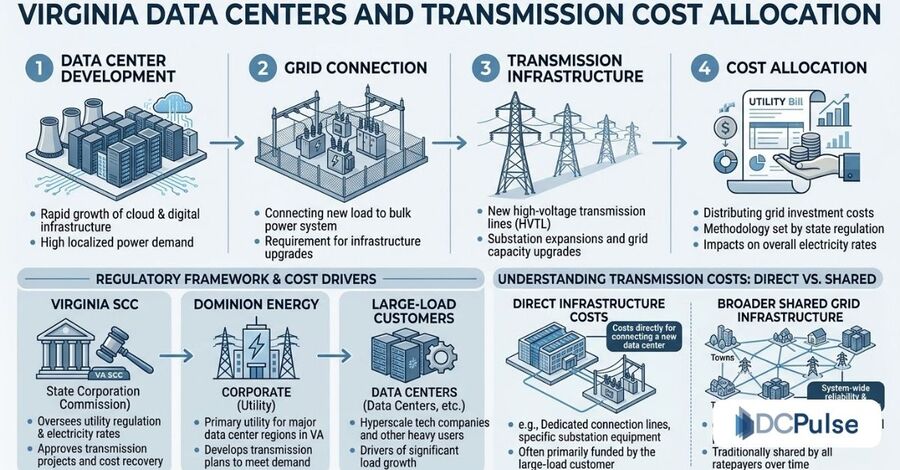
Virginia’s latest decision builds on a broader regulatory framework that has been developing around large electricity users.
The SCC previously created a dedicated GS-5 rate class for large-scale energy users, including hyperscale data centers. The new classification is scheduled to take effect on January 1, 2027, and is intended to establish rates that more closely reflect the costs associated with serving these customers.
The commission has also established minimum payment requirements for qualifying large-load customers. Under the framework described by the SCC, applicable customers will be required to pay at least 85% of their transmission and distribution costs each month, regardless of actual electricity consumption. New large-load customers contracting for service from January 1, 2027, will also face a minimum 14-year electric service obligation, subject to the applicable regulatory conditions.
Those measures indicate that Virginia is moving toward a utility model in which the financial exposure created by very large electricity loads is more closely tied to the customers generating that demand.
Transmission Becomes a Bigger Data Center Development Consideration
Transmission availability has become an increasingly important factor in data center site selection.
A suitable site is no longer evaluated only on land availability, fiber connectivity, and proximity to existing substations. Developers also need to understand whether the surrounding transmission network can accommodate the planned load and what upgrades may be necessary to connect the facility.
The Virginia policy introduces another consideration: who ultimately finances those upgrades.
A transmission project that exists because of a specific data center development could increasingly become a direct project cost rather than an expense distributed across a broader customer base. That distinction can influence project budgets, development schedules, and negotiations between utilities and large-load customers.
For hyperscale and AI-oriented campuses, the issue is particularly relevant because high-density computing infrastructure can require substantial and continuous electricity supply. The cost of establishing the electrical infrastructure needed to support those facilities can therefore become a material part of the overall development equation.
Implications for AI and High-Density Computing
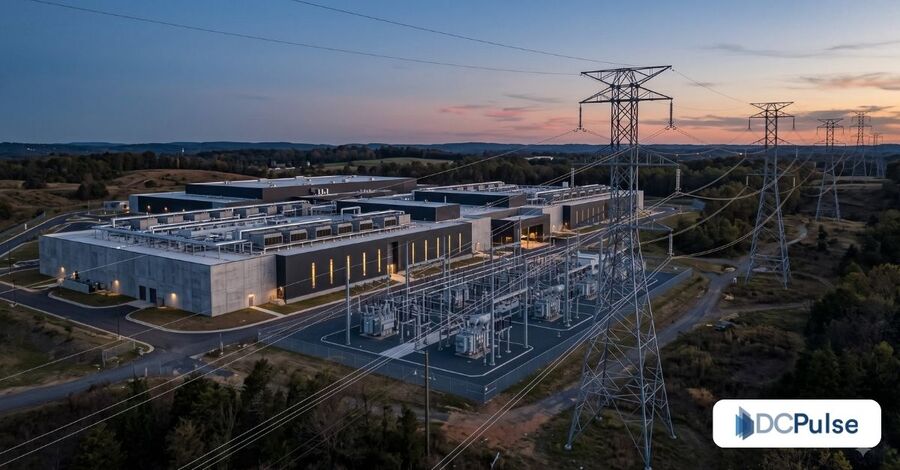
The decision arrives as the data center industry increasingly prepares facilities for artificial intelligence, accelerated computing, and other high-density workloads.
AI infrastructure can place new demands on both the amount and quality of available electricity. Data center operators are therefore evaluating grid capacity alongside cooling systems, land, network connectivity, and equipment deployment when planning new campuses.
Virginia’s regulatory direction could encourage developers to incorporate transmission-related expenditures earlier in the planning process.
The change may also make the distinction between speculative capacity requests and financially committed developments more important. A developer seeking substantial grid capacity could face greater scrutiny over the infrastructure that its project requires and the financial responsibility associated with that infrastructure.
Such an approach could favor projects with clearer construction plans, stronger financing, and more defined electricity requirements, although the practical effect will depend on the tariff ultimately proposed by Dominion and approved through the regulatory process.
Dominion’s Transmission Cost Case
The direct-assignment decision emerged from Dominion’s Rider T1 proceeding, which covers transmission-related costs.
Dominion had argued that infrastructure required specifically to connect large-load customers should not result in costs being subsidized by residential customers. The broader case involves significant transmission investment, with the utility seeking recovery of transmission costs through its regulated rates.
The SCC’s decision changes the direction of that cost discussion by requiring Dominion to develop a mechanism that can place certain infrastructure costs directly with the customers responsible for triggering the investment.
Virginia’s regulatory framework therefore increasingly separates the costs associated with serving large new loads from the costs of maintaining the broader electricity system.
A Potential Model for Other Data Center Markets
Virginia’s approach could attract attention beyond the Commonwealth because other states are facing similar challenges from rapidly expanding data center electricity demand.
The fundamental policy question is becoming increasingly common: how should utilities recover the cost of grid infrastructure required to support large digital infrastructure developments without creating excessive cost exposure for customers who do not generate that demand?
Virginia has already introduced several measures addressing this issue, including the GS-5 customer class, minimum payment obligations, and requirements concerning collateral and long-term service commitments. The latest transmission directive adds another component to that framework.
The broader direction is toward greater cost causation, where customers responsible for triggering specific infrastructure investments carry a larger portion of those costs.
What the Decision Means for Future Projects
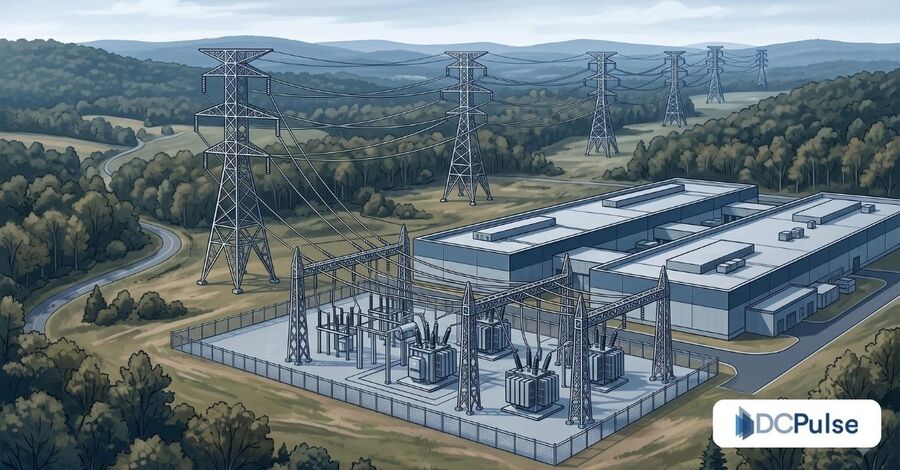
The immediate impact on individual data center developments will depend on the details of Dominion’s proposed tariff and how the SCC ultimately implements the new policy.
Developers may nevertheless need to account for transmission costs more explicitly when evaluating Virginia projects. Site selection could increasingly involve detailed assessments of grid capacity, required substations, transmission extensions, and the allocation of associated infrastructure costs.
For utilities, the policy provides a framework for planning large-load expansion while attempting to protect other customer groups from infrastructure costs that are primarily driven by new data center demand.
For the data center industry, the development represents a shift in the economics of grid access. Virginia remains an important market for cloud, hyperscale, and AI infrastructure, but access to its electricity network is increasingly becoming a cost-and-accountability issue as well as a technical one.
The next stage will depend on Dominion’s tariff proposal and subsequent SCC review. That process will help determine how directly data center operators are charged for transmission infrastructure and whether Virginia eventually extends similar cost-allocation principles to additional parts of the transmission network.