Pranav Hotkar
The rollout of 5G is not just upgrading network speeds; it is redefining where and how data is processed.
As latency-sensitive applications such as autonomous systems, real-time analytics, and immersive digital experiences expand, the limitations of centralized cloud infrastructure are becoming increasingly apparent. Moving data back and forth between distant data centers introduces delays that 5G alone cannot solve.
This is where edge data centers come into play.
By bringing compute and storage closer to end users, edge infrastructure reduces latency, improves performance, and enables real-time responsiveness. The combination of 5G connectivity and edge computing is creating a distributed architecture, where data is processed at multiple points across the network rather than in a few centralized locations.
However, this shift is not just technical; it is structural.
Operators must rethink network design, infrastructure placement, and resource management to support this decentralized model. The result is a new paradigm:
Connectivity is no longer defined by speed alone but by proximity, responsiveness, and intelligent distribution of compute resources.
What Does the Current Landscape of 5G and Edge Data Centers Look Like?
The current landscape of 5G and edge data centers is defined by rapid global network expansion and a parallel shift toward distributed computing infrastructure.
5G adoption has scaled aggressively. According to the Ericsson Mobility Report, global 5G subscriptions reached ~2.9 billion by the end of 2025, accounting for roughly one-third of all mobile subscriptions worldwide.
Global 5G Subscription Growth (2019–2025)
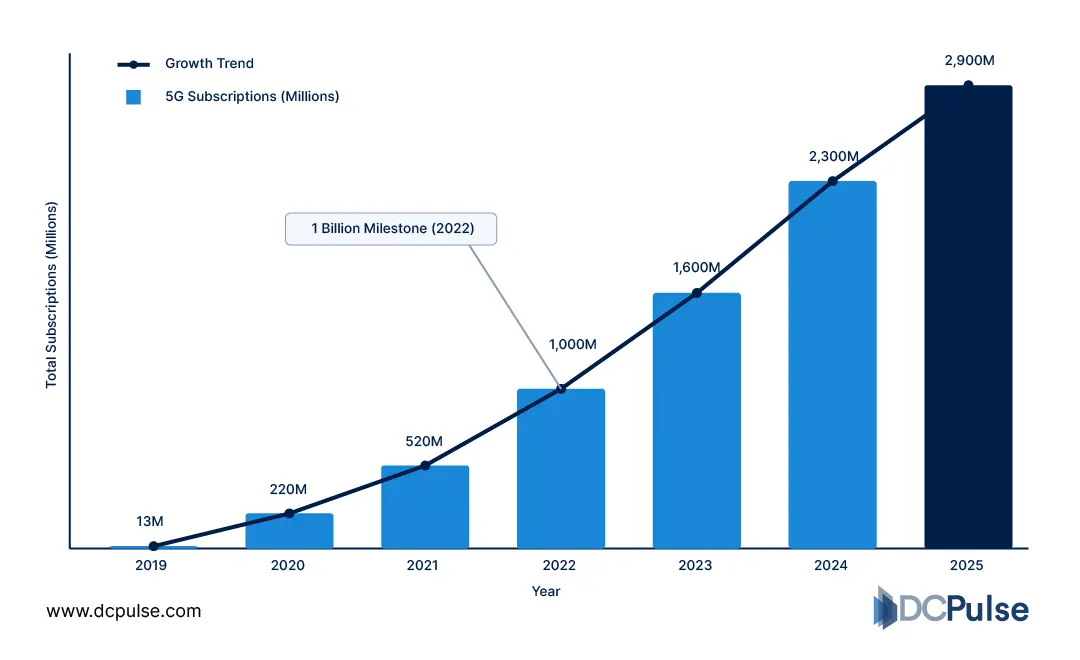
This growth is matched by expanding network coverage. 5G population coverage is expected to reach ~60% globally by 2025, with leading regions already nearing saturation levels.
The implication is structural. As mobile data traffic continues to rise sharply, centralized cloud architectures are increasingly insufficient to meet latency requirements. 5G networks are designed to support low-latency, high-throughput applications, but achieving this in practice requires compute resources to move closer to end users.
At the same time, telecom operators are evolving their networks to support edge computing integration, including technologies such as network slicing and distributed architectures. These developments are enabling new use cases that depend on real-time processing rather than centralized response cycles.
Growth of 5G-Enabled Latency-Sensitive Applications (Market Value in USD Billion)
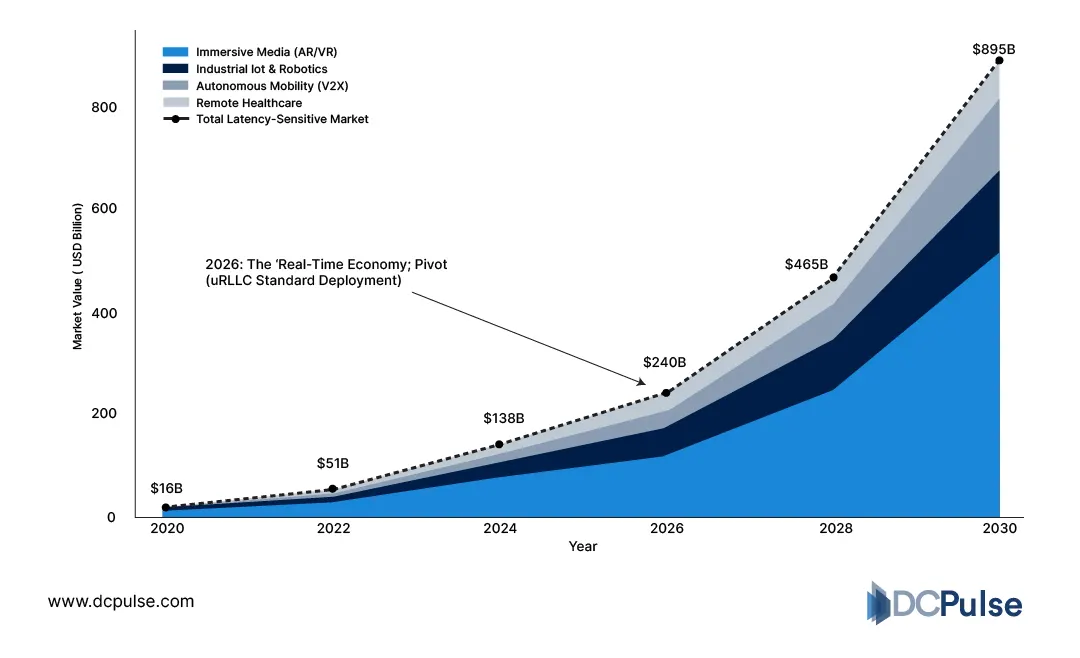
The pattern is clear; the current landscape is no longer defined by the centralized cloud alone; it is evolving into a distributed ecosystem where 5G connectivity and edge data centers work together to deliver low-latency, high-performance digital services at scale.
What Innovations Are Driving the Convergence of 5G and Edge Computing?
The convergence of 5G and edge computing is being driven by innovations that enable ultra-low latency, flexible resource allocation, and distributed processing.
One of the most critical developments is Multi-access Edge Computing (MEC), which brings cloud computing capabilities directly to the network edge. According to the European Telecommunications Standards Institute, MEC enables real-time data processing with significantly reduced latency, making it foundational for 5G-enabled applications.
Latency Comparison (Centralized Cloud vs. Edge)
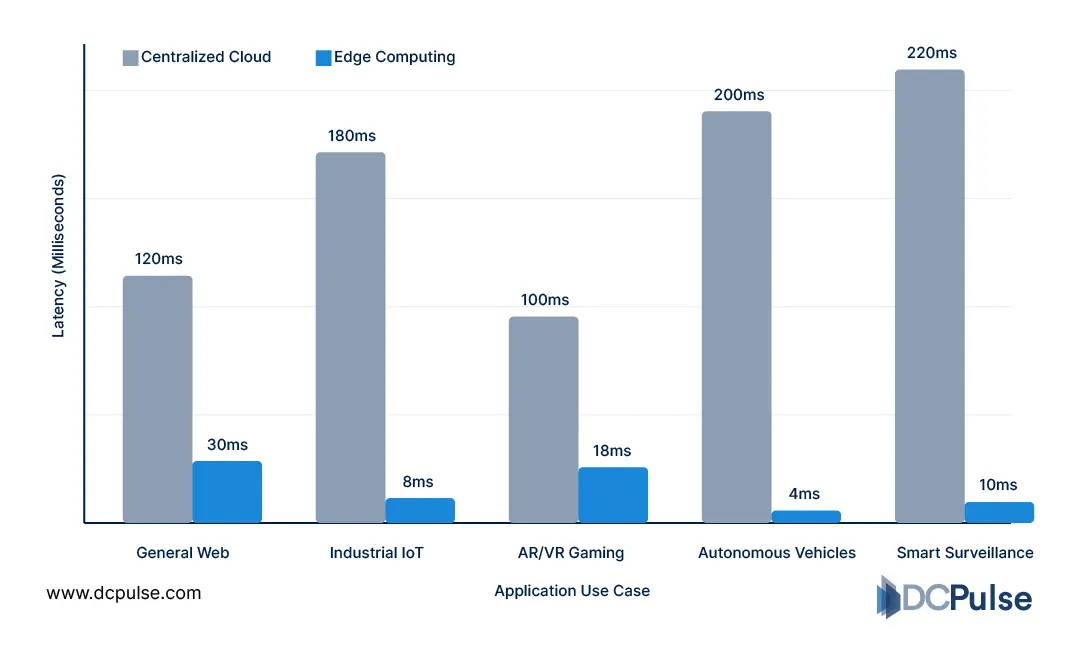
Another key innovation is network slicing, a core feature of 5G that allows multiple virtual networks to operate on shared infrastructure. Research shows that network slicing enables customized performance levels across use cases, from IoT to ultra-reliable low-latency communications.
5G Use Case Requirements: Latency & Bandwidth
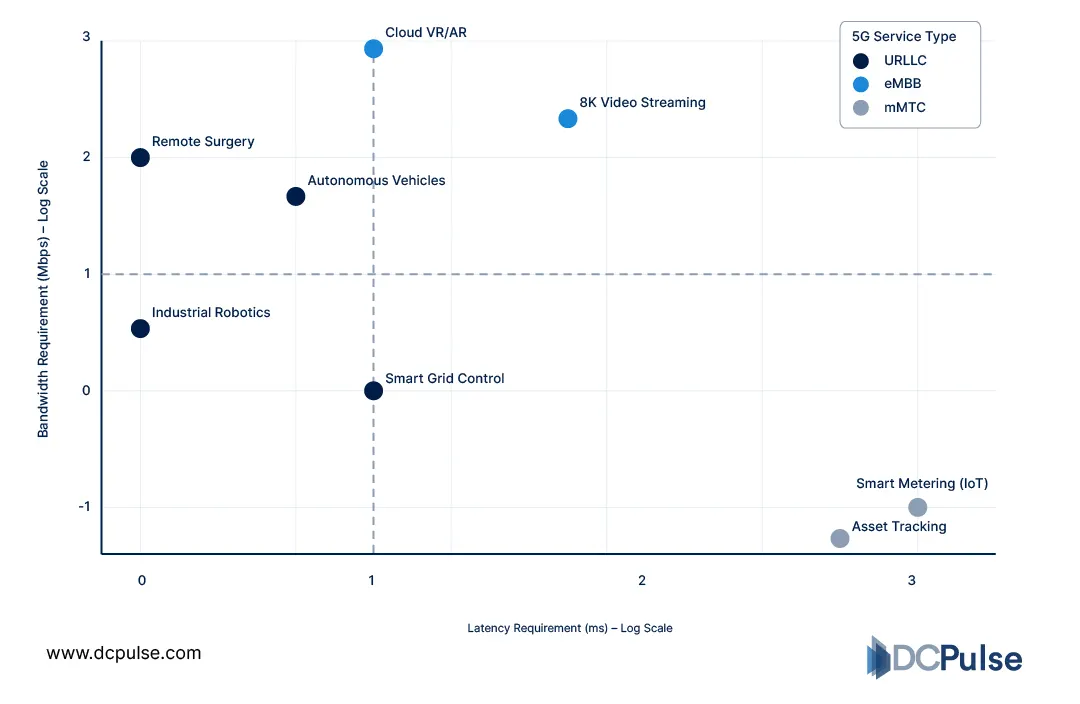
These technologies are increasingly integrated. Studies indicate that combining MEC with network slicing allows operators to optimize both compute and network resources, improving efficiency for latency-sensitive applications.
At a broader level, 5G architecture itself is evolving to embed edge capabilities. The 3rd Generation Partnership Project defines edge computing as a key component of next-generation network design.
The shift is clear; 5G and edge computing are converging into a data-driven, performance-optimized architecture, where improvements in latency, bandwidth, and processing efficiency are measurable, not just conceptual.
Who Is Driving 5G and Edge Data Center Deployment Globally?
The global deployment of 5G and edge data centers is being driven by a combination of telecom operators, hyperscalers, and infrastructure investors, all responding to rapidly growing demand for low-latency digital services.
At a market level, the scale of this shift is significant. The global 5G edge computing market was valued at ~USD 4.7 billion in 2024 and is projected to exceed USD 51 billion by 2030, reflecting a CAGR of nearly 48%.
5G Edge Computing Market Forecast (2024–2030)
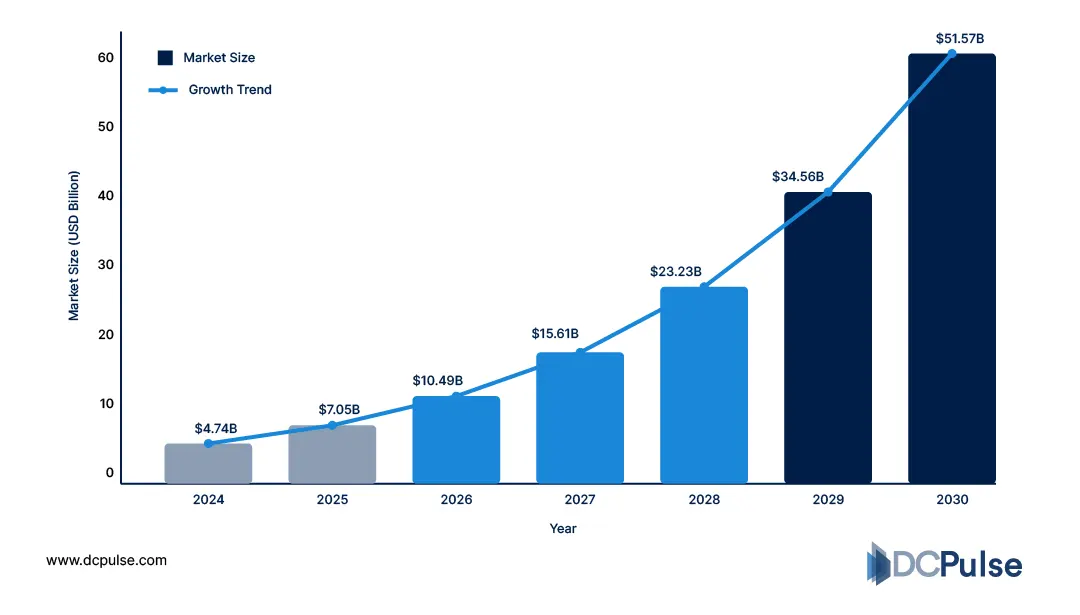
This growth is directly tied to infrastructure expansion. The data center segment alone is expected to grow from ~USD 838 million in 2024 to nearly USD 9.9 billion by 2030, highlighting how edge facilities are becoming a critical layer of the broader digital ecosystem.
Edge Data Center Market Growth (2024-2030)
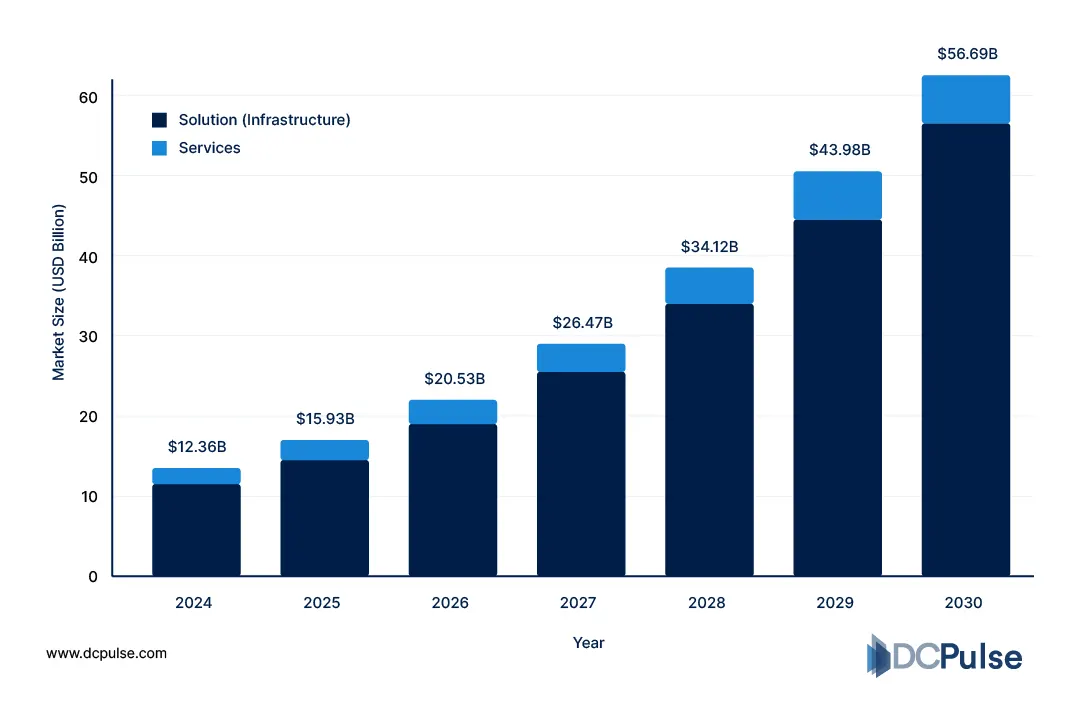
Geographically, deployment is concentrated in leading digital economies. North America accounted for over 34% of the global edge data center market in 2024, driven by strong 5G rollout, hyperscale cloud presence, and AI-driven demand.
At the ecosystem level, deployment is not led by a single group. Instead, telecom operators are building 5G networks, while cloud providers and technology firms are expanding edge infrastructure to support real-time applications such as AI, IoT, and streaming. Industry research highlights that edge computing is transitioning from early trials to active commercial deployments across the U.S., Europe, and Asia-Pacific, involving collaboration across telecom, cloud, and enterprise players.
The pattern is clear;
The expansion of 5G and edge data centers is being driven by a multi-stakeholder ecosystem, where telecom, cloud, and infrastructure players are jointly building a distributed connectivity layer to support next-generation digital services.
Will Edge Data Centers Become the Backbone of Future Connectivity?
Edge data centers are rapidly moving from a complementary layer to a core component of modern connectivity infrastructure.
As 5G adoption expands and latency-sensitive applications become mainstream, the limitations of centralized cloud models are becoming more apparent. Real-time services, ranging from autonomous systems to immersive digital experiences, require data processing to occur closer to the point of use, making edge infrastructure increasingly essential.
However, this transition is not uniform. Centralized data centers will continue to play a critical role in large-scale processing and storage, while edge facilities handle latency-critical workloads. The result is not a replacement but a hybrid architecture, where centralized and distributed systems operate together.
What is emerging is a structural shift in how connectivity is defined. Performance is no longer determined solely by bandwidth or speed but by how efficiently data can be processed and delivered in real time.
The direction is clear;
Edge data centers will not replace traditional infrastructure, but they will become a foundational layer of future connectivity, enabling the full potential of 5G and next-generation digital services.