Pranav Hotkar
For more than a decade, scale meant acreage. Hyperscale campuses stretched across hundreds of acres, absorbing power in bulk and expanding in phases that mirrored cloud growth. Bigger was better, at least when land was cheap, grid access was predictable, and workloads were less dense.
That equation is changing.
Urban land is tightening. Power interconnection queues are stretching into years. Meanwhile, AI workloads are driving rack densities to levels that compress more compute into less physical space. Enterprises still want proximity to clouds, carriers, and customers, but they no longer need an entire campus to get it.
The result is a quiet architectural shift: compact, multi-tenant data centers designed for density, shared infrastructure, and faster deployment cycles. These facilities are not smaller in capability. They are tighter in engineering, sharper in economics, and increasingly central to how digital infrastructure grows inside constrained markets.
This is not a retreat from scale. It is a recalibration of how scale is delivered.
How Compact, Multi-Tenant Designs Are Reshaping Data Center Economics
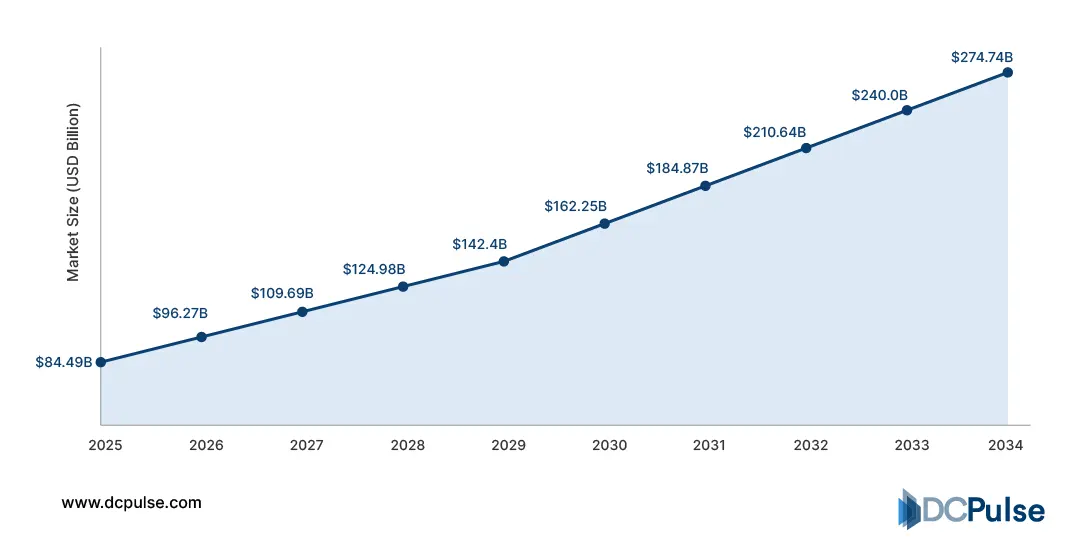
The multi-tenant data center sector has transitioned from a niche alternative to a core pillar of global digital infrastructure, driven by hybrid cloud adoption, power constraints, and rising rack power density. The global colocation market is forecast to reach USD 570 billion by 2034, growing at a compound annual rate reflecting strong demand from hyperscalers, enterprises, and edge-oriented workloads.
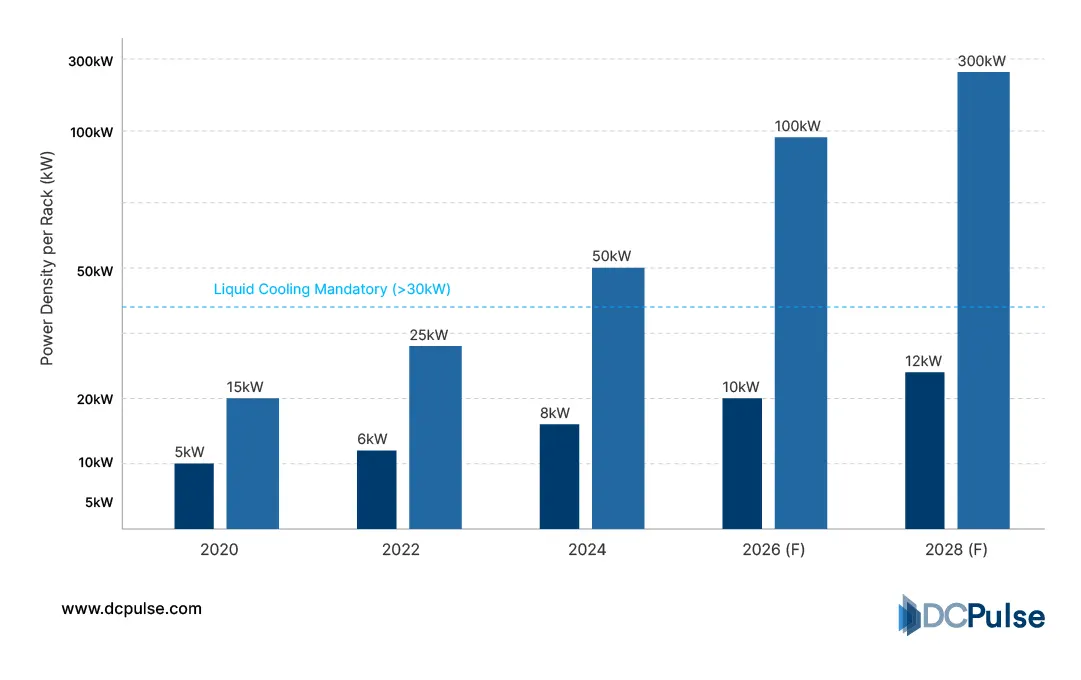
At the same time, structural market dynamics are reshaping footprint decisions. Rising rack power densities, from legacy averages of 5-8 kW to well above 20 kW in many AI-ready facilities, are creating pressure on older designs and accelerating adoption of purpose-built, high-density, multi-tenant halls.
Global Data Center Colocation Market Forecast (2025–2034)
Power availability, not just floor space, is becoming the limiting factor. Nearly 62 % of operators cite energy constraints as a barrier to expansion, and grid limitations in key hubs delay new facility development. This makes compact designs, which demand less interconnection time and often deliver usable density closer to urban cores, increasingly attractive.
Average Rack Power Density Trends (2020–2028)
By 2025, retail colocation led the multi-tenant market, but wholesale segments are growing faster as hyperscalers secure contiguous high-density capacity, a trend that underscores the strategic value of flexible, tenant-centric builds.
In this landscape, compact multi-tenant designs are not merely smaller footprints; they are responses to real constraints, power, interconnection, and density that shape where and how data capacity is delivered.
Engineering Density: Designing for More in Less
Compact, multi-tenant data center designs are not just smaller footprints; they’re engineered for density, efficiency, and adaptability in ways legacy builds aren’t. Rising AI workloads, escalating rack power densities, and land constraints have driven operators and builders to rethink thermal, power, and architectural systems to make compact facilities viable and scalable.
One major innovation is liquid cooling integration, which enables high-density racks to operate efficiently in tighter spaces. Liquid cooling, from direct-to-chip loops to immersion techniques, transfers heat far more effectively than air, allowing servers to be placed closer together without thermal throttling. This efficiency not only supports greater compute in less real estate but also enables facilities to meet sustainability goals through more efficient energy use.
Another structural innovation is vertical architecture and modular building blocks. Vertical designs allow multi-story occupancy on constrained urban parcels, while modular prefabricated units (like Vertiv’s SmartMod™ and MegaMod™) can be delivered quickly and integrated into existing buildings or urban plots with minimal site work. This approach supports rapid deployment and flexibility as workloads evolve.
Software and automation are also essential. Modern DCIM tools enable dynamic thermal and power management in dense, multi-tenant environments, optimizing cooling distribution, power allocation, and performance without manual intervention.
Together, these innovations make compact designs not just possible, but highly competitive with traditional hyperscale builds in terms of performance, agility, and total cost of ownership.
Capital in Motion: Where Operators Are Placing Their Bets
The shift toward compact, multi-tenant data center designs isn’t just conceptual; it’s reflected in real, market-level expansions and strategic pivots by major operators serving diverse demand profiles.
Colocation providers and multi-tenant operators are actively expanding their footprints to capture the accelerating demand for high-density, proximity-oriented capacity. According to a recent analysis, retail colocation accounted for over 60 % of the multi-tenant data center market in the United States in 2025, while wholesale segments continue to expand, reflecting a strategic diversification of capacity models. Retail facilities traditionally serve many smaller tenants, whereas wholesale capacity appeals to larger cloud and enterprise customers seeking contiguous space with high-density capabilities.
Multi-Tenant Colocation Capacity Market Share (2022–2026)
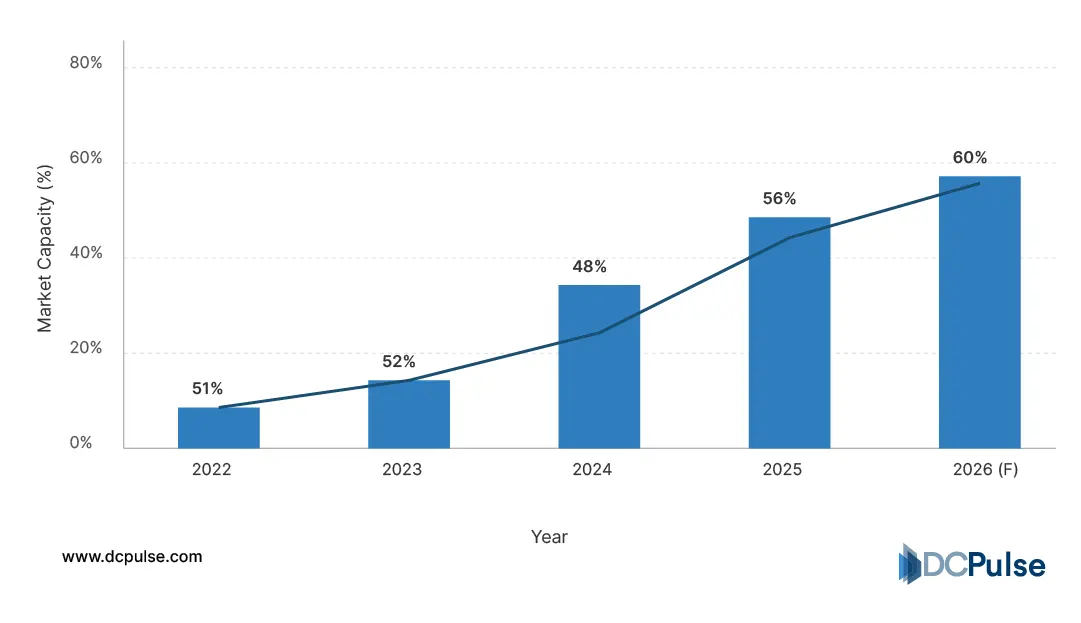
Strategic growth is also geographic and operational. Tier-I metros like Atlanta have emerged as dynamic colocation markets, absorbing hundreds of megawatts of new capacity as operators, including QTS, Flexential, and CyrusOne, develop facilities optimized for mixed tenant use and interconnection density.
Leading global players are reinforcing these trends. Equinix, with 260+ data centers across 33 countries, continues to expand its colocation and interconnection infrastructure to support hybrid cloud and multi-tenant models, emphasizing proximity and carrier neutrality. Digital Realty, with 300+ facilities in more than 25 countries, similarly bridges retail and large-scale multi-tenant demand.
These moves show that the industry is investing not just in scale but in flexible, dense, and interconnected facilities that can serve a broader array of tenants, from enterprise cloud adopters to hyperscale and edge-oriented workloads.
The Compact Era: Strategy in a Constrained World
Compact, multi-tenant data center design is no longer a workaround for tight urban land; it is becoming a strategic default in power-constrained markets.
For operators, the imperative is clear: design for density per megawatt, not just megawatts per campus. Facilities that integrate liquid cooling readiness, modular power blocks, and vertical scalability will command premium tenants in AI and hybrid cloud environments.
For investors, compact multi-tenant builds represent a shift in capital efficiency. Smaller footprints near demand hubs reduce transmission latency, accelerate lease-up timelines, and diversify tenant risk compared to single-occupant hyperscale campuses.
For enterprises and cloud buyers, proximity and flexibility matter more than sheer square footage. Multi-tenant ecosystems offer carrier neutrality, interconnection density, and scalable growth without the long lead times associated with greenfield hyperscale projects.
Urban planners and policymakers face a parallel challenge: enabling high-density digital infrastructure within limited grid envelopes. Streamlined permitting, brownfield redevelopment incentives, and power modernization will determine which metros attract the next wave of compact facilities.
The next decade won’t eliminate hyperscale campuses, but growth will increasingly favor intelligent compression: more compute, more tenants, and more interconnection delivered in less space.