DCPulse
Duos Edge AI has marked the public opening of its Abilene, Texas, edge facility, bringing a modular edge data center to the Region 14 Education Service Center as the company expands its infrastructure model across underserved markets. The company held a community open house and ribbon-cutting event on July 23, 2026, following the facility's launch of operations earlier in the year. The event brought together educators, community representatives, business partners, and regional stakeholders to examine the facility and its potential applications.
The Abilene deployment is part of a broader approach that places computing infrastructure closer to organizations and users rather than relying exclusively on centralized facilities. For the data center industry, the project illustrates how smaller, distributed facilities can complement larger data center campuses by providing localized computing, connectivity, and data-processing capabilities.
Edge Data Center Brings Computing Closer to West Texas Users
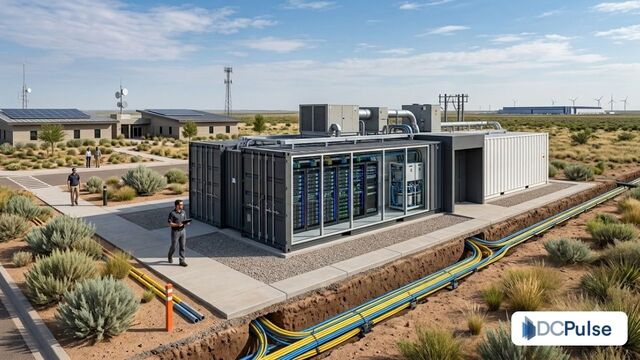
The Abilene facility is located at the Region 14 Education Service Center on Texas State Highway 351. Douglas Edge AI describes the site as a local carrier-neutral colocation facility and computing hub, with capabilities for bandwidth, secure data processing, and low-latency AI workloads. The company says the facility is intended to support more than 40 school districts and charter schools across an 11-county area covering more than 13,000 square miles.
The location within an education service center gives the facility a specific regional role. Rather than operating solely as a conventional commercial colocation site, the deployment is tied to education and other local applications, including healthcare, workforce development, and businesses.
Region 14 Education Service Center currently highlights the Duos facility as an enterprise-grade data center capability serving the Abilene region. The organization identifies connectivity, education, healthcare, and enterprise activity among the areas that can benefit from the infrastructure.
Modular Architecture Supports Distributed Infrastructure
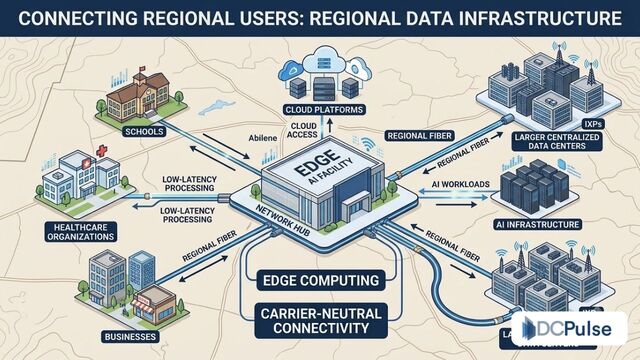
The Abilene project also demonstrates the role of modular architecture in edge computing. Douglas Edge AI describes its facilities as adaptive, modular, and scalable edge data centers, allowing infrastructure to be deployed closer to the locations where data is generated or consumed.
For data center operators, this model addresses a different requirement from the traditional hyperscale approach. Large campuses concentrate substantial computing capacity in locations selected around power, land, network connectivity, and other infrastructure considerations. Edge facilities instead emphasize geographic proximity and the ability to process workloads closer to users and data sources.
The distinction becomes particularly relevant for applications where network distance can affect response times. AI inference, interactive applications, remote operations, and other latency-sensitive workloads can require computing resources that are geographically closer to the point of use.
Duos says its Abilene platform is intended to provide low-latency AI capabilities and secure data processing. Those capabilities can complement cloud infrastructure by creating an additional processing layer between local users and larger centralized computing environments.
Carrier-Neutral Connectivity Expands the Infrastructure Role
The carrier-neutral positioning of the Abilene facility is another important element for digital infrastructure. A carrier-neutral data center can provide a location where multiple network providers and customers can connect, creating an environment for interconnection and colocation rather than tying the facility to a single connectivity provider.
Duos' January announcement described the Abilene site as a local carrier-neutral colocation facility. The company also positioned the facility as a way to provide enhanced bandwidth and access to cloud services and AI-driven applications for organizations in the surrounding region.
That model can become increasingly relevant as digital infrastructure moves toward distributed architectures. Enterprises do not necessarily rely on a single computing location, and workloads can move between on-premises systems, edge facilities, colocation sites, and public cloud environments.
A regional edge facility can therefore operate as a connectivity and processing layer within a broader architecture. Its effectiveness depends on factors including network availability, carrier participation, power capacity, physical security, workload requirements, and the proximity of end users.
Abilene's Wider Data Center Ecosystem
The Duos facility is entering a market that is also seeing broader investment in data centers and network infrastructure. The Development Corporation of Abilene identifies power, fiber, and infrastructure as components of the city's expanding technology and data center ecosystem. The organization also points to local workforce-development programs focused on data center operations.
Fiber infrastructure is another part of the regional equation. FiberLight announced in February 2026 that it planned approximately 1,400 route miles of new high-capacity network infrastructure across West Texas and a third diverse route into Abilene. The company said the expansion was designed to support hyperscale and AI workloads.
The combination of edge computing and network expansion is relevant because computing capacity alone does not establish a complete digital infrastructure ecosystem. Data centers require connections to customers, cloud platforms, carriers, and other facilities. Diverse fiber routes can provide additional transport options, although the availability of a route does not automatically establish connectivity to any particular data center.
Edge Infrastructure Complements Larger Data Centers
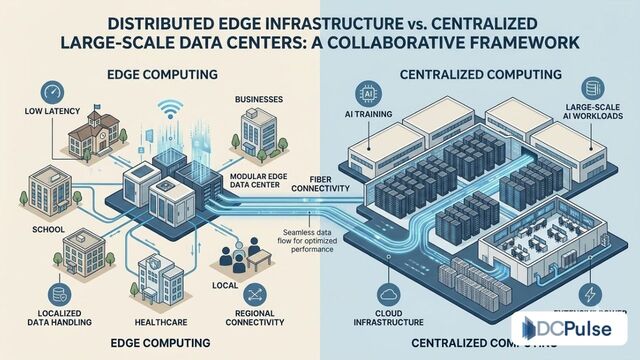
The Abilene deployment does not represent a replacement for large-scale data center campuses. Its role is more closely associated with localized computing and connectivity, particularly where users or organizations require processing closer to the source of data.
This distinction is important as AI workloads become more geographically distributed. Centralized facilities remain suited to large-scale training, high-density computing, and workloads that benefit from extensive shared infrastructure. Edge facilities can address applications where proximity, response time, local processing, or connectivity requirements carry greater importance.
Douglas Edge AI's broader network already includes locations in Texas such as Amarillo, Victoria, Waco, Dallas, and Corpus Christi, according to the company's public materials. Its website also lists Abilene among its current market locations, reflecting the company's strategy of deploying edge infrastructure across multiple regional markets.
For the wider data center sector, this distributed approach adds another layer to the infrastructure landscape. Regional facilities can extend computing capabilities into markets that may not require or support the scale of a hyperscale campus while still providing organizations with access to dedicated digital infrastructure.
Education Provides an Early Edge AI Use Case
Education is a notable use case for the Abilene facility because the deployment is directly connected to Region 14 Education Service Center. The company's January announcement said the infrastructure is intended to support more than 40 school districts and charter schools across the region, alongside healthcare, workforce development, and local businesses.
Local processing can be relevant in environments where large volumes of data need to be handled without sending every workload to a distant centralized facility. The potential applications depend on the individual organization, network architecture, and computing requirements.
Region 14's own website describes the facility as bringing enterprise-grade data center capabilities into the Abilene region. That positioning reflects a broader shift in which data center infrastructure is becoming part of regional economic and institutional infrastructure rather than being concentrated exclusively in traditional technology hubs.
A Distributed Model for West Texas Digital Infrastructure
The Abilene opening represents a completed deployment within Duos Edge AI's broader edge infrastructure strategy. Its significance for DC Pulse lies less in the scale of the individual facility and more in the infrastructure model it represents: modular computing, carrier-neutral connectivity, and localized AI capabilities positioned closer to regional users.
Abilene's wider investment in data centers and high-capacity fiber provides an additional infrastructure layer around the project. Fiber expansion, data center development, workforce programs, and edge computing can collectively strengthen the region's digital infrastructure, although the commercial and technical impact of each project will depend on actual capacity, connectivity, demand, and deployment timelines.
The grand opening therefore marks another step in the development of distributed digital infrastructure in West Texas. As AI and other data-intensive applications expand beyond centralized facilities, projects such as the Abilene edge data center demonstrate how smaller computing sites can form part of a broader network connecting regional users with enterprise, cloud, and large-scale data center infrastructure.