DCPulse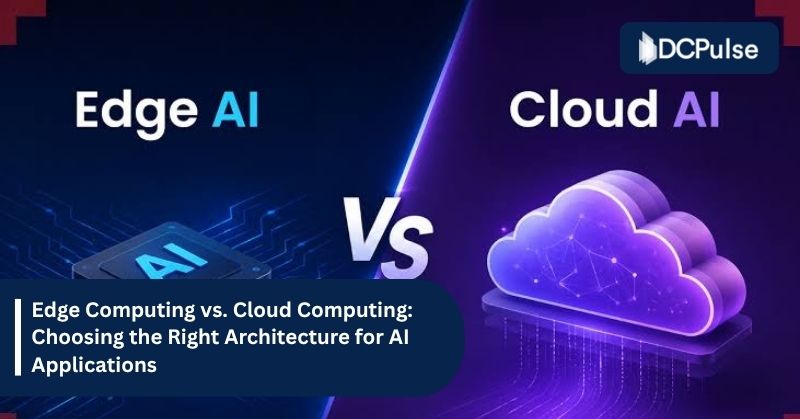
Artificial intelligence is changing how digital infrastructure is designed, operated, and connected. From enterprise automation and computer vision to industrial analytics and real-time decision-making, AI applications increasingly depend on infrastructure that can process data efficiently and deliver results within operational constraints.
Cloud computing has established a flexible foundation for AI development, model training, and large-scale inference. Edge computing offers a different approach, placing computing resources closer to where data is generated and decisions are made. For data center operators, the distinction extends beyond server location. It affects facility design, network architecture, power requirements, cooling systems, and the relationship between centralized data centers and distributed infrastructure.
The choice between edge and cloud is therefore becoming an architectural decision rather than a simple technology preference. In many AI deployments, a combination of both models may provide the most practical path.
Cloud Computing Provides the Centralized AI Foundation
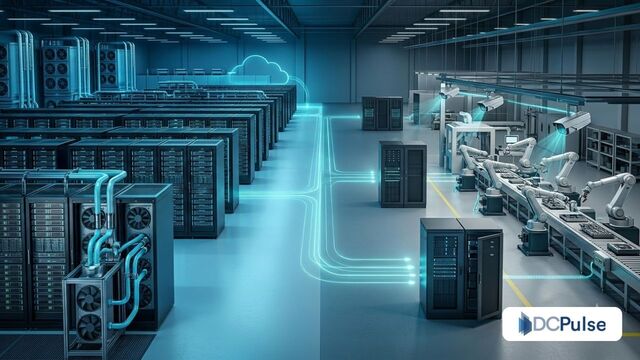
Cloud data centers offer a centralized environment for computing, storage, networking, and software services. Their ability to support scalable infrastructure makes them an important part of AI application development, particularly when workloads require substantial computing resources or access to large datasets.
AI model training is one area where centralized infrastructure can be valuable. Training workloads may require substantial processing capacity, high-speed communication between accelerators, and access to large volumes of data. Data center environments can support these requirements through dedicated computing clusters, high-performance networking, and storage systems designed for intensive workloads.
Cloud infrastructure also supports model development, testing, deployment, and management. Organizations can provision resources according to application requirements rather than maintaining all computing capacity within their own facilities. The availability of managed services can further simplify infrastructure operations for businesses developing AI applications.
For data center developers, this demand creates opportunities across hyperscale campuses, colocation facilities, and specialized AI infrastructure. High-density computing, accelerator deployment, power availability, and cooling design are increasingly relevant considerations for facilities supporting AI workloads.
The centralized model, however, does not eliminate the importance of distance between computing resources and end users. Applications that depend on rapid responses, local data processing, or continuous operation in environments with limited connectivity may require a different infrastructure arrangement.
Edge Computing Moves AI Closer to the Data
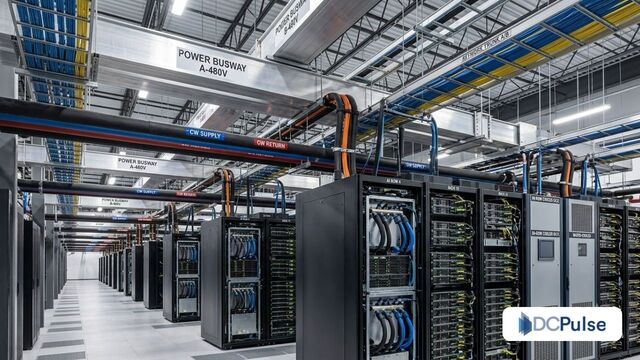
Edge computing places processing and storage resources closer to the devices, systems, and users generating data. Rather than sending every input to a distant cloud environment, an edge architecture can process selected workloads locally or at a nearby infrastructure location.
For AI applications, this arrangement can be relevant when response time, connectivity, or data handling requirements influence system performance. Industrial equipment, connected devices, security systems, and other operational environments may generate data that benefits from processing near its source.
A manufacturing facility, for example, may use AI-enabled systems to analyze equipment conditions or identify issues through computer vision. A nearby edge deployment can support local processing, while the cloud remains available for broader analytics, model management, or long-term data storage.
The infrastructure supporting edge AI differs from a large centralized data center. Edge facilities may operate in smaller buildings, telecommunications locations, enterprise sites, or distributed computing environments. Their design must account for the physical conditions of each deployment, including available power, cooling, connectivity, security, and maintenance access.
The term "edge" does not necessarily mean a single standardized facility type. It describes a distributed computing approach, and the infrastructure can range from on-premises systems to regional data centers positioned closer to users.
Latency and Connectivity Shape the Architecture
Latency is one of the most important considerations when selecting an infrastructure model for AI applications. The time required to move data between an application and its computing resources can influence the suitability of centralized or distributed processing.
Applications involving immediate operational responses may have different infrastructure requirements from workloads that can tolerate delays. An industrial control system, for instance, may need local processing for time-sensitive decisions, while an enterprise analytics platform may be able to use centralized cloud infrastructure.
Network architecture is central to this distinction. Cloud-based AI deployments depend on connectivity between users, data sources, and data centers. Edge deployments introduce additional infrastructure locations, which can reduce the distance to selected data sources but also increase the complexity of managing network connections.
Fiber availability, network redundancy, carrier access, and regional connectivity are therefore important considerations for both models. Edge locations may benefit from proximity to users and devices, while centralized facilities may offer access to larger-scale network and computing ecosystems.
Latency alone does not determine the correct architecture. Application requirements, data volumes, reliability expectations, and the location of existing infrastructure all influence the decision.
Power and Cooling Requirements Differ by Deployment
AI infrastructure has brought greater attention to power and cooling across the data center industry. The requirements of an AI application depend on the models being used, the hardware deployed, workload intensity, and operating conditions.
Centralized AI data centers may support large computing clusters with substantial power requirements. These facilities need electrical infrastructure capable of serving computing equipment, networking systems, cooling equipment, and other supporting loads. High-density deployments can also influence rack design, power distribution, and thermal management.
Edge facilities face a different set of challenges. A distributed deployment may operate within a smaller power envelope, but the available capacity at each location can be limited. Cooling systems must suit the local environment and equipment configuration, while maintenance requirements may be more difficult to manage across many sites.
The resulting infrastructure strategy is not simply a choice between high power consumption and low power consumption. Centralized facilities may concentrate demanding workloads, while edge locations distribute selected processing functions across multiple sites.
For operators, the distinction affects site selection, equipment specifications, power planning, and the design of future expansion capacity.
Data Management and Security Influence Deployment Decisions
AI applications depend on data, and the way data is collected, transferred, stored, and processed can influence infrastructure design.
Cloud environments provide centralized locations for aggregating datasets, managing models, and coordinating application services. This can be useful for organizations that require access to shared data across multiple locations or teams.
Edge computing can support local processing where transmitting all raw data to a centralized environment is impractical or unnecessary. Some applications may process information locally and transfer only selected results, summaries, or relevant datasets to the cloud.
The approach to data handling depends on the application and its operational requirements. Data governance, privacy obligations, security controls, and retention policies remain important regardless of where computing takes place.
Distributed infrastructure can also introduce additional operational considerations. Each edge location requires appropriate security measures, software management, hardware maintenance, and connectivity arrangements. The number of sites involved can affect how infrastructure teams monitor and maintain deployments.
For data center operators, these considerations create a broader requirement: infrastructure must support not only computing capacity but also the systems needed to manage data and applications across different locations.
Hybrid Architectures Connect Edge and Cloud
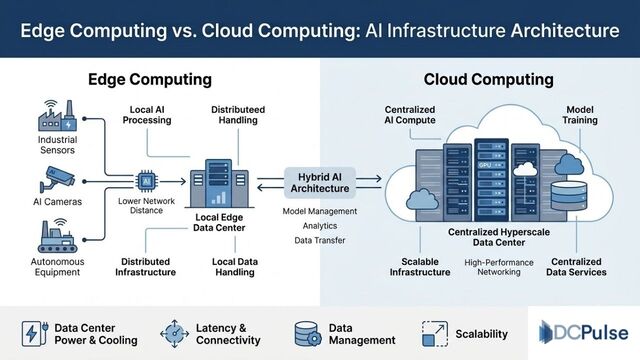
Many AI applications do not require an exclusively edge-based or cloud-based deployment. A hybrid architecture can divide workloads between distributed infrastructure and centralized data centers.
In such an arrangement, edge systems may handle selected local processing tasks, while cloud environments support model training, centralized analytics, software updates, and broader data management. The division of responsibilities depends on the application and the infrastructure available.
A retail organization, for example, could use local systems for selected computer vision tasks while maintaining centralized services for analytics and application management. An industrial operator could combine local data processing with cloud-based model development and fleet-wide monitoring.
This architecture creates interdependence between different parts of the digital infrastructure ecosystem. Edge locations require reliable connectivity to central facilities, while cloud data centers may depend on distributed systems to collect and process information from multiple environments.
For operators, hybrid deployments can create demand across different facility types, including enterprise sites, regional data centers, colocation facilities, and larger cloud infrastructure campuses.
What Data Center Operators Need to Consider
The growth of AI applications is creating a more varied infrastructure landscape. Centralized data centers remain important for large-scale computing and shared services, while edge deployments address requirements associated with location, connectivity, and local processing.
For data center developers and operators, several questions can guide infrastructure planning:
-
Workload requirements: Does the application need substantial centralized computing capacity, local processing, or both?
-
Network design: What connectivity, redundancy, and latency characteristics are required?
-
Power and cooling: Can the proposed location support the hardware and workload requirements?
-
Site selection: Is the infrastructure positioned appropriately relative to users, data sources, and network access?
-
Operations: Can the organization manage hardware, software, security, and maintenance across the deployment?
-
Scalability: Can the architecture expand as application usage and computing requirements change?
These considerations apply differently depending on the deployment. A large AI training facility and a distributed inference system may require very different infrastructure strategies, even when they support the same broader application.
The Infrastructure Outlook for AI
The relationship between edge computing and cloud computing is becoming an important consideration for AI infrastructure planning. Cloud environments offer centralized computing and data services, while edge deployments provide a way to position selected processing capabilities closer to users and data sources.
The distinction has direct implications for data center development. Power availability, cooling systems, connectivity, site selection, and operational management all influence how AI infrastructure can be deployed and expanded.
No single architecture is suitable for every AI application. The appropriate model depends on workload characteristics, application requirements, data handling, network conditions, and the infrastructure available.
For the data center industry, the broader implication is a more distributed and interconnected infrastructure environment. Centralized AI facilities and edge locations may serve different functions, but their relationship will remain important as organizations develop and deploy increasingly complex AI applications.