DCPulse
The expansion of artificial intelligence infrastructure is increasing the importance of high-capacity fiber networks that connect data centers, cloud platforms, and computing campuses. For operators developing large-scale AI facilities, connectivity is becoming a core infrastructure requirement alongside power, cooling, and physical space.
Lightpath, a US-based fiber infrastructure provider, announced in July 2026 that it would extend its network to two hyperscale data center campuses under construction in Saline, Michigan, and Port Washington, Wisconsin. The projects are planned to exceed 1 gigawatt of capacity each and are being developed with an anchor hyperscale customer.
The planned builds reflect a broader shift in data center development: as AI infrastructure expands, network providers must deliver not only greater bandwidth but also diverse routes, dependable performance, and connectivity aligned with the construction schedules of large computing facilities.
Two hyperscale campuses add to Lightpath’s expansion.
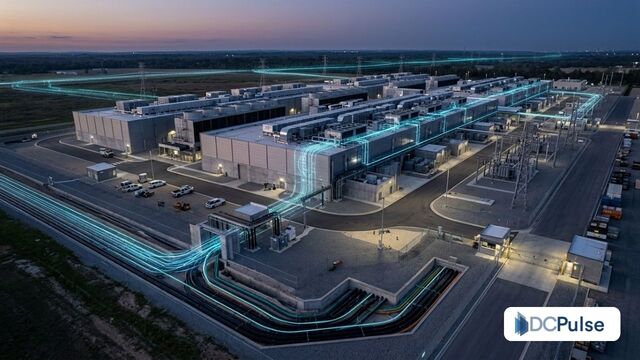
The Michigan and Wisconsin projects are part of Lightpath’s broader effort to extend fiber infrastructure into markets attracting hyperscale and AI investment. Under the announced plans, the Saline connection is expected to be delivered by the end of 2026, while the Port Washington build is scheduled for the second quarter of 2027. Both deployments are being delivered in partnership with an unnamed anchor hyperscale customer.
Lightpath said the projects will provide multi-terabit capacity and what it describes as triverse fiber infrastructure. The company has not publicly identified the hyperscale customer in its announcement, limiting visibility into the specific computing workloads or service requirements associated with the campuses.
The delivery schedules are significant because network infrastructure must be coordinated with the wider development of a hyperscale site. Fiber availability, physical access, equipment installation, and network commissioning all influence when a facility can establish the connections required for commercial operations.
For developers, connectivity planning that begins early in construction can reduce the risk of treating external network access as a final-stage requirement. The timing and configuration of fiber deployment can also influence how easily a new campus integrates with existing data center and cloud infrastructure.
Why AI infrastructure needs more fiber capacity
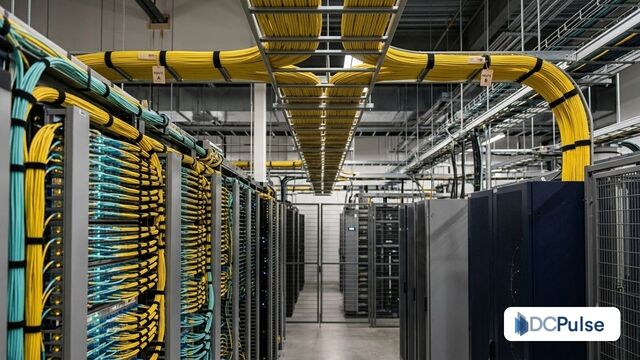
Traditional cloud environments already depend on fiber connections between data centers, enterprise networks, and internet exchange points. AI infrastructure adds further demands as large computing clusters exchange data during model training, distribute workloads, and connect to systems that store or process information.
The scale and pattern of this traffic depend on the workload. Distributed AI training can require substantial communication between computing nodes, while inference services may generate repeated requests between applications, users, and remote computing resources.
These requirements place greater emphasis on network capacity, latency, and reliability. A high-performance data center cannot deliver its full value if network bottlenecks constrain data movement between facilities or limit access to external services.
Fiber expansion therefore represents more than an increase in available bandwidth. The location of network routes, the number of independent paths, and the ability to scale transport capacity can all affect how effectively hyperscale operators deploy and operate their infrastructure.
Lightpath's latest projects reflect this relationship between computing capacity and network design. Their announced multi-terabit capability is intended to support the connectivity requirements of campuses planned at a scale exceeding one gigawatt each. Actual performance, however, will depend on the complete network design and the operational configuration of each deployment.
Route diversity becomes a resilience priority.
Network resilience is another consideration for large AI campuses. A connection with substantial bandwidth may still leave a facility exposed if its available routes share vulnerable physical infrastructure.
Route diversity can help reduce that exposure by providing alternative paths between critical locations. The practical benefit depends on whether routes are genuinely independent, including their physical conduits and other infrastructure dependencies.
Lightpath has positioned route-diverse connectivity as part of its approach to serving hyperscale customers. Its July announcement describes the Michigan and Wisconsin deployments as part of a wider strategy combining newly constructed fiber, existing network assets, and infrastructure provided by strategic partners.
For data center operators, this approach highlights an important procurement consideration. Network resilience is not determined solely by the number of circuits purchased or the bandwidth specified in a contract. Operators also need to understand how connections are routed, where they enter a facility, and whether a disruption could affect multiple services simultaneously.
Diverse connectivity can support business continuity, inter-data-center communications, and access to distributed computing resources. Nevertheless, redundancy must be assessed against the facility's actual requirements rather than assumed from a provider's general description of its network.
Lightpath extends its network footprint.
The two campus deployments follow other announced investments in Lightpath's US network. The company has reported expansions in Phoenix, eastern Pennsylvania, and Columbus, alongside plans for a long-haul fiber corridor connecting Columbus, Ohio, and Chicago, Illinois.
The Columbus-to-Chicago project, announced in May 2026, is planned to span approximately 392 route miles. Lightpath said the build would include 327 miles of new underground, multi-conduit fiber infrastructure, with completion targeted for the end of 2028. The planned corridor also incorporates eight LightCube data centers, providing opportunities for colocation, amplification, and interconnection along the route.
For hyperscalers, the combination can create additional options for moving workloads and data across facilities. For network providers, it offers an opportunity to develop infrastructure around established and emerging data center corridors rather than relying exclusively on existing metro footprints.
The commercial case for these investments still depends on customer commitments, construction execution, and the ability to deliver services on schedule. Announced routes and planned capacity should not be confused with infrastructure that is already operational.
Deployment timing and infrastructure coordination
The pace of AI infrastructure construction creates a coordination challenge for fiber providers. Data center developers must align buildings, electrical infrastructure, cooling systems, and network access, often while several construction activities progress simultaneously.
Fiber projects can also require rights of way, permitting, conduit installation, and coordination with other utilities. New routes may offer greater control over capacity and physical diversity, but they introduce construction requirements that existing network infrastructure may avoid.
Lightpath's planned use of both new builds and existing network assets illustrates one way to address these competing considerations. Reusing available infrastructure where appropriate can complement new construction, although the suitability of existing routes depends on their location, capacity, and resilience characteristics.
The Michigan and Wisconsin projects will provide a practical test of the company's ability to coordinate fiber delivery with the schedules of very large data center developments. Their announced completion dates establish targets, not confirmation that the infrastructure has been commissioned or that the campuses have entered operation.
What the expansion means for data center operators
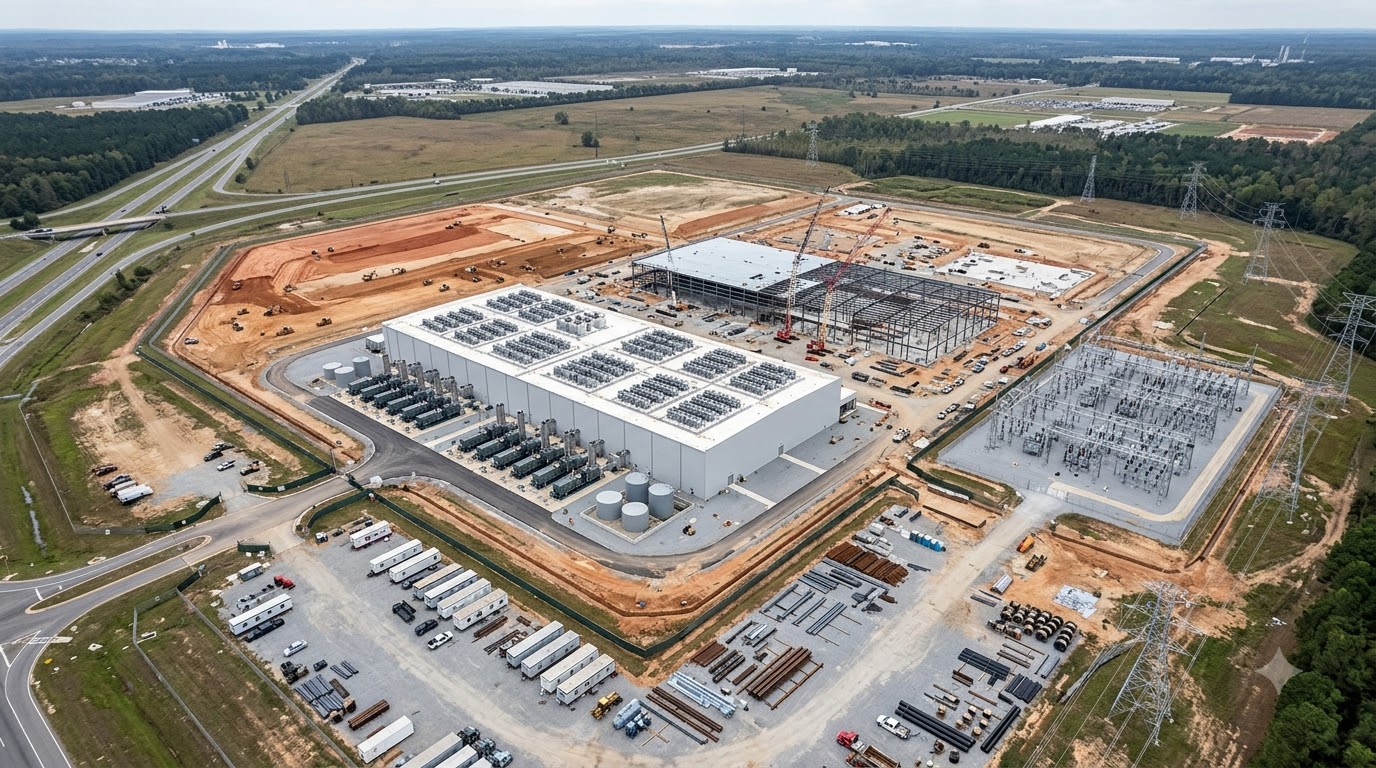
Lightpath's expansion underscores the growing interdependence of computing infrastructure and telecommunications networks. As AI campuses become larger and more distributed, operators must evaluate external connectivity alongside power availability, cooling design, and site selection.
Several factors will shape the value of the new deployments: delivered capacity, route independence, commissioning schedules, and the quality of connections to other data centers and network hubs. The ability to expand capacity as workloads grow will also matter over the operating life of each campus.
The wider market implications extend beyond hyperscalers. Colocation providers, cloud platforms, carriers, and enterprises may all benefit from stronger regional connectivity where new fiber routes improve access to major computing locations. The scale of those benefits will depend on network availability, commercial arrangements, and the extent to which additional infrastructure serves the broader market.
For now, Lightpath's announced projects represent planned infrastructure investment rather than proof of completed capacity. Their progress through construction and commissioning will offer a clearer indication of how effectively fiber providers can keep pace with AI-driven data center development.
The central issue for the industry is increasingly straightforward: compute capacity alone is not enough. Reliable, scalable, and appropriately diversified fiber connectivity is an essential part of building data center infrastructure capable of supporting the next phase of AI and cloud growth.