DCPulse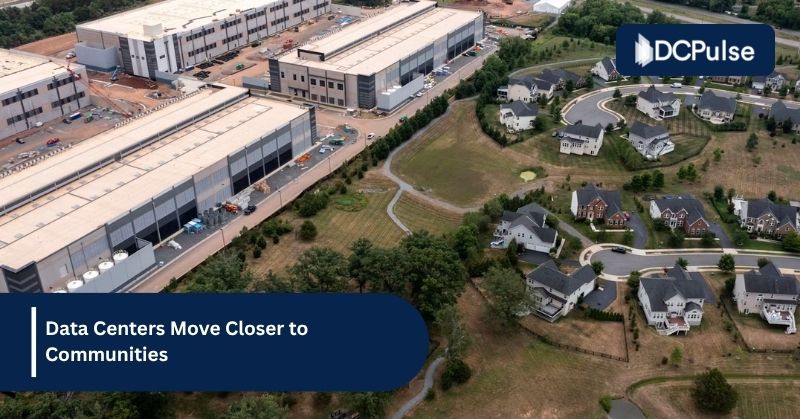
Data centers have traditionally been discussed as large-scale infrastructure projects defined by computing capacity, power availability, network connectivity, and land. As digital services become more deeply embedded in everyday life, however, the relationship between these facilities and the communities around them is receiving greater attention.
A community-centered approach does not necessarily mean smaller facilities or locally owned data centers. Instead, it places greater emphasis on how data center development interacts with local electricity systems, water resources, employment, land use, connectivity, and surrounding communities.
The issue is becoming more relevant as cloud computing, artificial intelligence, digital services, and high-performance workloads create new requirements for data center capacity. Infrastructure decisions made at the local level can have consequences that extend well beyond the boundaries of a single facility.
Local Infrastructure Is Becoming Part of the Data Center Equation
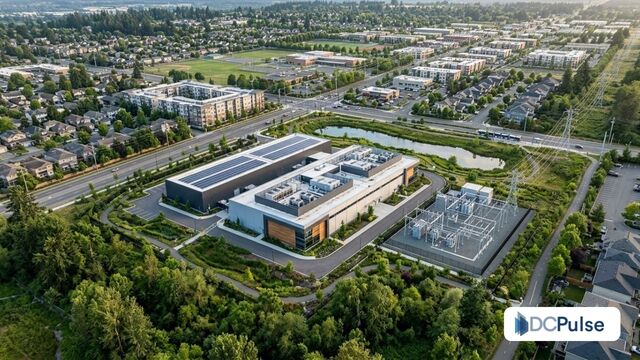
Electricity remains one of the most important considerations in data center development. Facilities require dependable power not only for computing equipment but also for cooling, networking, security, and other supporting systems.
A community-centered model encourages developers and infrastructure planners to consider how a new facility fits within the existing power ecosystem. Grid capacity, transmission infrastructure, backup generation, renewable energy procurement, and the timing of additional demand can all influence the relationship between a data center and the surrounding area.
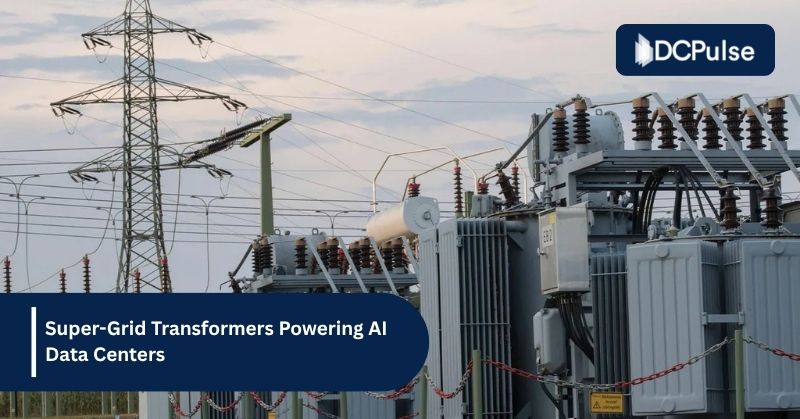
Local planning can also create opportunities for more coordinated infrastructure investment. Power upgrades, substations, fiber routes, and other infrastructure improvements may support both data center operations and broader digital or industrial development when projects are planned with the surrounding region in mind.
Cooling and Water Require Local Consideration
Cooling has become an increasingly important part of the data center conversation as computing densities change. AI infrastructure, in particular, can place different demands on facility cooling systems compared with conventional enterprise workloads.
The suitability of a cooling strategy depends heavily on local conditions. Climate, water availability, energy costs, environmental requirements, and facility design all influence which technologies are practical.
A community-centered data center strategy therefore requires greater attention to local resource conditions. Closed-loop systems, air-based cooling, liquid cooling, heat-reuse approaches, and other technologies can have different infrastructure implications. No single cooling model is appropriate for every location.
The central issue is not simply how efficiently a facility can remove heat. Local stakeholders also have an interest in understanding how cooling infrastructure interacts with regional water and energy systems.
AI Infrastructure Raises the Stakes
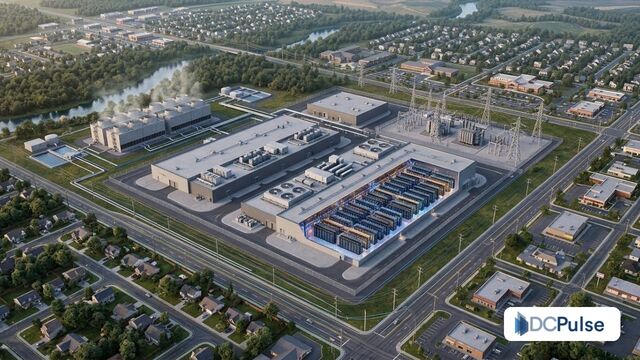
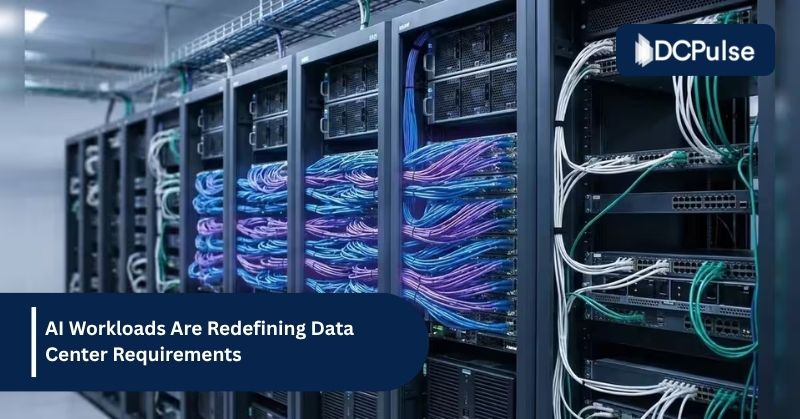
The expansion of AI infrastructure adds another dimension to the discussion. AI workloads can require substantial computing resources, while accelerated computing environments can create different requirements for power delivery, cooling, networking, and facility design.
Data center campuses serving AI workloads may therefore influence local infrastructure planning in ways that differ from earlier generations of facilities. Power availability, high-capacity connectivity, equipment density, and cooling architecture become closely connected decisions.
A community-centered approach does not imply limiting AI infrastructure development. Rather, it creates a framework in which capacity expansion is considered alongside the infrastructure required to support it.
For communities hosting major digital infrastructure projects, greater visibility into these requirements can also support more informed planning around roads, utilities, telecommunications, emergency services, and other supporting systems.
Fiber Connectivity Creates Broader Digital Benefits
Data centers depend on high-capacity networks, but connectivity infrastructure can also provide value beyond the facility itself.
Fiber routes connecting data centers to cloud platforms, internet exchanges, enterprises, telecommunications networks, and other facilities can strengthen the digital infrastructure of a region. The extent of that benefit depends on how networks are designed and whether surrounding businesses, institutions, and communities can access the resulting connectivity.
Regional data center development can therefore become part of a broader digital infrastructure strategy. Local governments, network operators, utilities, and developers may have opportunities to coordinate investments rather than treating each infrastructure project as an isolated development.
Such coordination becomes particularly relevant in areas seeking to attract technology companies, digital services, advanced manufacturing, research organizations, and other businesses that depend on reliable connectivity.
Community Benefits Need More Than Construction Activity
Data center projects can create construction activity and require specialized technical services, but community impact cannot be assessed solely through the initial development phase.
Long-term operations require engineers, technicians, facilities specialists, security personnel, network professionals, and other workers. The availability of these skills can influence both operating resilience and the economic relationship between a facility and its host region.
Training and workforce-development initiatives can become one component of a community-centered strategy. Partnerships with educational institutions, technical training providers, and local organizations may help develop skills relevant to data center operations and the wider digital infrastructure sector.
The potential benefit is broader when workforce development connects data center projects with the existing economic structure of a region rather than operating as a separate initiative.
Transparency Is Becoming an Infrastructure Issue
Community acceptance can influence the environment in which large infrastructure projects are planned and developed. Data centers can involve complex questions around electricity demand, land use, cooling systems, construction activity, noise, transportation, and environmental considerations.
Clear communication can help distinguish established project information from assumptions or expectations. Communities need meaningful information about the infrastructure being proposed, while developers need a practical understanding of local priorities and constraints.
Greater transparency can also support more informed discussions about trade-offs. A data center may bring digital infrastructure investment and economic activity while simultaneously requiring additional power, network, land, and utility infrastructure. A community-centered framework acknowledges both sides of that equation.
Digital Infrastructure Planning Becomes More Regional
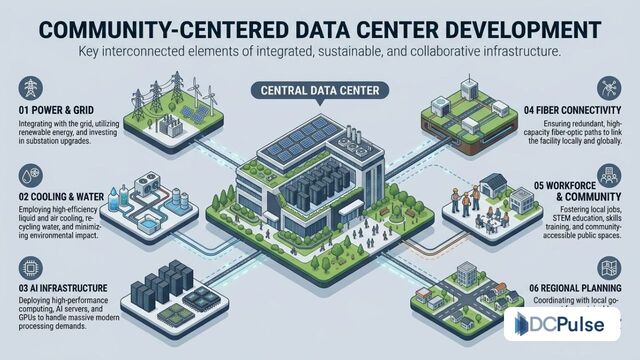
The traditional model of evaluating a data center primarily at the facility level is becoming less sufficient as computing requirements expand. Power, fiber, cooling, land, water, and transportation infrastructure are interconnected components of the digital ecosystem.
Regional planning can provide a broader perspective. Instead of assessing individual projects independently, infrastructure stakeholders can examine how multiple facilities could affect electricity networks, fiber corridors, water resources, industrial areas, and local development plans.
This approach may also support more deliberate decisions about where new capacity is most suitable. Locations with stronger power infrastructure, diverse connectivity, appropriate cooling conditions, and compatible land-use plans can offer a different development profile from locations where major infrastructure upgrades would be required first.
The Path Toward More Sustainable Data Center Growth
Community-centered development is not a replacement for traditional data center priorities such as uptime, security, performance, and cost efficiency. Those requirements remain fundamental to digital infrastructure.
The difference lies in expanding the definition of successful infrastructure development. A data center can be technically effective while also being evaluated according to how responsibly it interacts with its surrounding infrastructure and community.
For operators, developers, utilities, network providers, and policymakers, the approach creates a broader planning framework. Power procurement, cooling design, connectivity, workforce development, environmental considerations, and local infrastructure can be evaluated as connected elements rather than separate issues.
As cloud services and AI workloads continue to shape demand for computing capacity, the physical footprint of digital infrastructure is becoming increasingly visible. Community-centered data centers offer one possible framework for managing that expansion with greater attention to the infrastructure systems and communities that make digital services possible.
The future of data center development will depend not only on where computing capacity can be built but also on how effectively that capacity can be integrated into the infrastructure around it. For the next phase of digital infrastructure growth, that relationship may become as important as the data center itself.