DCPulse
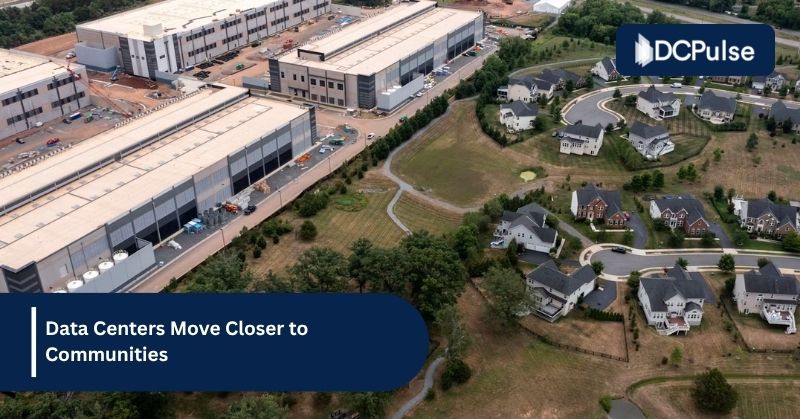
The global data center industry is facing a challenge that extends beyond computing capacity, artificial intelligence infrastructure, and cloud demand. As operators develop new facilities to support digital services, their relationships with the communities surrounding those projects are becoming increasingly important. Electricity consumption, water requirements, land use, noise, construction activity, and local economic benefits are all influencing how residents evaluate new developments.
Community acceptance is emerging as an important consideration in data center planning. Although operators have different approaches to public engagement, the industry is increasingly under pressure to demonstrate how facilities can coexist with local priorities. Promises of investment and employment alone may not be sufficient when residents have questions about utility costs, environmental impacts, and long-term resource availability.
Several approaches offer a path toward stronger community relationships. However, meaningful progress depends on whether these efforts deliver measurable outcomes rather than remain limited to public relations campaigns.
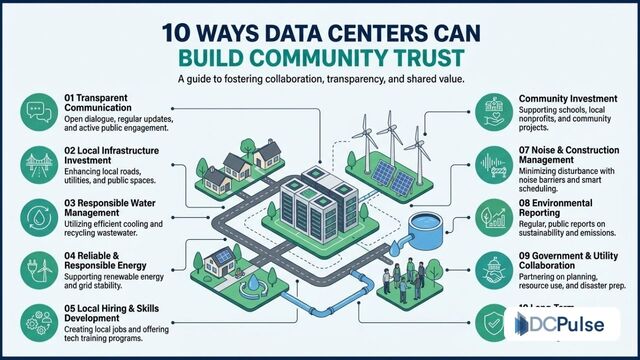
1. More Transparent Communication Before Construction
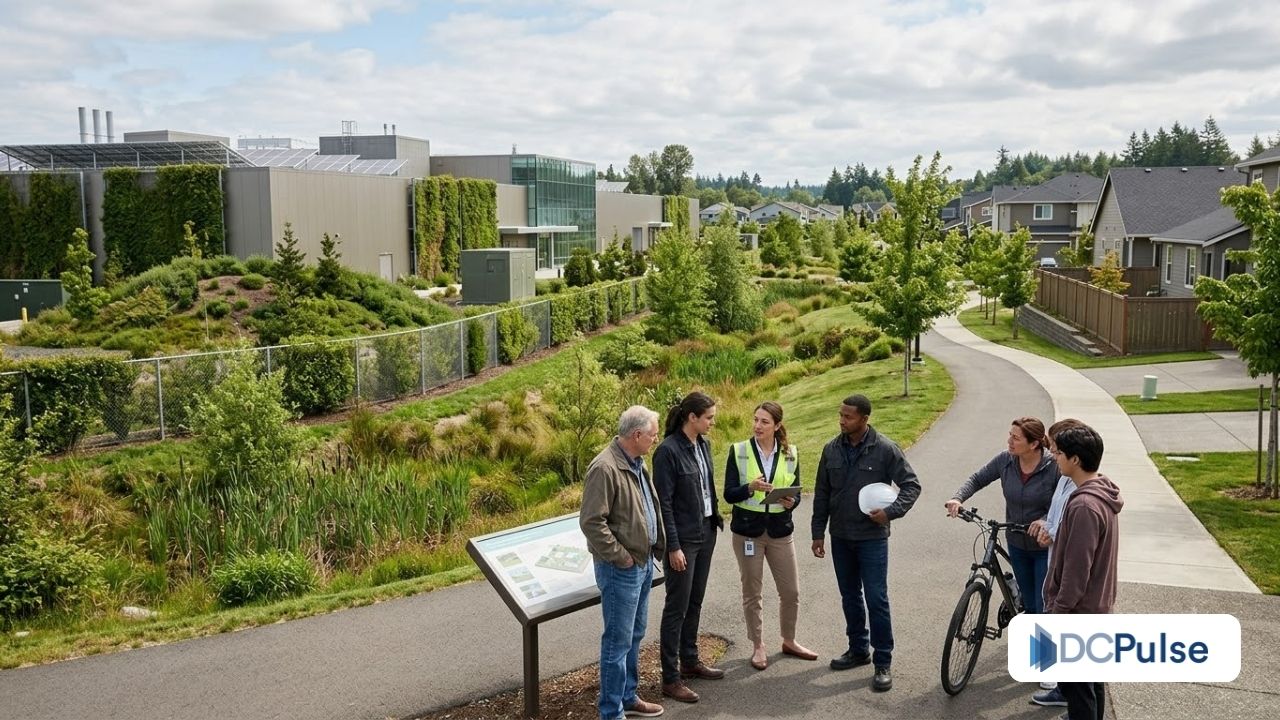
Early communication gives residents an opportunity to understand a proposed facility before major development decisions are finalized. Public meetings, project websites, planning documents, and accessible explanations of technical requirements can help communities assess what a development may mean for their surroundings.
Data center projects can involve complex decisions concerning electrical substations, transmission infrastructure, backup generators, cooling systems, and construction schedules. Clear explanations of these elements can make discussions more productive.
The remaining challenge is timing. Communities sometimes encounter projects only after significant planning has taken place. Consultation introduced late in the approval process can create the perception that public participation is a formality rather than an opportunity to influence project design.
2. Investment in Local Infrastructure
New data centers can require substantial supporting infrastructure, including electrical connections, roads, drainage systems, telecommunications links, and other site improvements. Depending on the project and local arrangements, some of these investments may also benefit surrounding areas.
Coordination with local authorities and utility providers can help identify opportunities to improve infrastructure while addressing the requirements of a new facility. Road improvements, better site access, and appropriately planned utility upgrades can contribute to more effective development.
However, infrastructure investment does not automatically translate into broad community benefits. Residents may still question who pays for grid expansion, whether existing services face additional pressure, and how the costs and benefits are distributed.
Clear agreements, public documentation, and accountability for infrastructure commitments are important to establishing trust.
3. Responsible Water Management
Water use has become an important consideration in discussions about data center sustainability, particularly in regions experiencing drought or competing demand for limited supplies. Cooling requirements vary considerably according to facility design, operating conditions, climate, and technology choices.
Some operators are exploring alternative cooling approaches, reclaimed water, and more detailed monitoring of water consumption. These measures can help align facility operations with local resource conditions when they are appropriately designed and implemented.
The industry's challenge lies in communicating water requirements in a meaningful context. A general sustainability statement does not tell residents how much water a facility expects to use, when demand may peak, or how its consumption could affect a local watershed.
Site-specific disclosure, including the distinction between drinking water and alternative supplies, can help communities understand the actual implications of a project.
4. Greater Attention to Energy Demand
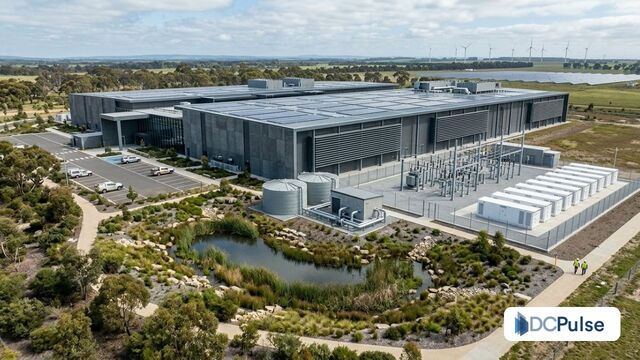
Electricity demand is among the most significant issues shaping public debate about data center development. AI workloads, cloud computing, and high-performance computing can require substantial power capacity, while new facilities may also depend on grid upgrades and additional generation.
Some operators are pursuing renewable energy procurement, long-term power purchase agreements, energy storage, and more flexible approaches to managing electricity demand. These efforts can support broader energy objectives, depending on how projects are structured and integrated into the power system.
Yet renewable energy commitments do not necessarily resolve every local concern. Residents may want to know whether a project requires new transmission lines, how grid reliability will be maintained, and whether infrastructure costs could affect electricity customers.
Greater transparency about power sourcing, expected demand, and utility arrangements can help distinguish between corporate climate commitments and the practical effects of a specific development.
5. Local Hiring and Skills Development
Employment opportunities remain one of the most visible potential benefits of data center investment. Construction projects can support demand for electricians, engineers, equipment specialists, contractors, and other skilled workers. Operating facilities also require technical staff, security personnel, maintenance professionals, and facilities management expertise.
Partnerships with vocational institutions, universities, and workforce development organizations can help local residents prepare for these opportunities.
However, expectations must reflect the actual employment profile of a facility. Data centers are capital-intensive developments, and their permanent staffing requirements may be smaller than residents anticipate when compared with large manufacturing operations.
Realistic job projections, accessible training pathways, and transparent reporting on local recruitment can help prevent disappointment. The industry's credibility depends on communicating the difference between temporary construction employment and permanent operational roles.
6. Community Investment Beyond the Project Site
Some data center companies support local education, technology training, environmental initiatives, charitable organizations, and community facilities. These programs can strengthen relationships when they respond to priorities identified by residents rather than relying exclusively on corporate assumptions.
Educational partnerships may be particularly relevant to digital infrastructure because they can connect communities with technical skills and future career opportunities. Support for local organizations can also provide benefits beyond the immediate construction period.
Nevertheless, charitable contributions should not be treated as a substitute for addressing environmental or infrastructure concerns. A community grant does little to resolve unresolved questions about noise, water availability, or electricity demand.
Trust is more likely to develop when community investment complements responsible site planning and operational accountability.
7. Better Noise and Construction Management
Data centers contain equipment that can produce continuous or intermittent noise, including cooling systems, fans, pumps, and backup power equipment. Construction activity can introduce additional disruption through heavy vehicles, machinery, lighting, and changes in local traffic.
Noise assessments, equipment placement, acoustic barriers, and operating procedures can help reduce potential impacts. Construction schedules and traffic management plans can also limit disruption to nearby neighborhoods.
The difficulty is that technical compliance and community experience do not always align. Residents may be concerned about nighttime noise, low-frequency sound, or the cumulative effects of multiple developments in the same area.
Effective management requires more than an initial assessment. Ongoing monitoring, accessible complaint procedures, and corrective action when problems arise can demonstrate that operators take local concerns seriously.
8. Stronger Environmental Reporting
Environmental reporting provides another opportunity for data center operators to demonstrate progress. Metrics covering energy efficiency, water consumption, emissions, and resource management can help stakeholders understand how facilities perform over time.
Consistent reporting is particularly valuable as the industry expands its role in supporting AI and other compute-intensive applications. Comparisons across reporting periods can reveal whether efficiency improvements are keeping pace with changing workloads.
However, differences in reporting boundaries and measurement methods can make comparisons difficult. Corporate-level sustainability figures may also obscure the performance of individual facilities.
More facility-level disclosure, clearly explained measurement methods, and independent verification where appropriate would help communities evaluate environmental claims with greater confidence.
9. Collaboration With Local Governments and Utilities
Local authorities, planning agencies, and electricity and water providers play important roles in determining how data center development fits within existing infrastructure and long-term community plans.
Early coordination can help identify suitable sites, assess cumulative resource requirements, and clarify responsibilities for supporting infrastructure. Regional planning is particularly important where several proposed facilities could compete for the same electricity, water, or land resources.
The industry's challenge is that individual project assessments may not capture the combined impact of multiple developments. A facility that appears manageable in isolation could contribute to greater regional pressure when considered alongside other industrial and digital infrastructure projects.
Shared planning information and coordinated infrastructure assessments can provide a more complete basis for decision-making.
10. Accountability After the Facility Opens
Community engagement should continue after construction and commissioning. Operational performance may differ from initial projections, and new concerns can emerge as workloads increase, cooling requirements change, or surrounding development expands.
Regular community updates, published performance indicators, designated points of contact, and documented responses to complaints can help maintain constructive relationships.
Operators also need processes for reviewing commitments made during project approvals. If promised infrastructure improvements, environmental measures, or local training programs are delayed, clear explanations and corrective plans are essential.
The industry's credibility ultimately depends on whether commitments remain meaningful after a facility becomes operational and public attention moves elsewhere.
Where the Industry Still Gets It Wrong
Despite these opportunities, several weaknesses continue to undermine community trust. One is the gap between broad corporate messaging and the local realities of individual projects. Statements about sustainability, economic growth, or digital innovation may carry limited weight when residents cannot access detailed information about resource consumption and infrastructure requirements.
Another weakness is the tendency to measure community engagement through the number of meetings held or donations made rather than through the quality of public participation and the resolution of concerns. Consultation has limited value when residents believe important decisions have already been made.
The distribution of benefits also deserves greater attention. Construction spending, tax arrangements, permanent employment, utility investments, and environmental impacts can affect different groups in different ways. A project may deliver regional economic benefits while creating localized disruption for nearby households.
Finally, the industry must recognize that community trust cannot be established through a single standardized approach. A project in a water-stressed region may face different concerns from one in an area with substantial electricity capacity and established industrial infrastructure. Local conditions should shape both project design and public engagement.
Community Trust as a Long-Term Infrastructure Requirement
Data centers are becoming increasingly important to cloud services, digital commerce, artificial intelligence, and modern communications. Their continued expansion will depend not only on access to land, power, connectivity, and capital, but also on the ability to address the concerns of the places where they operate.
For developers and operators, the strongest approach combines early consultation, realistic economic commitments, transparent environmental reporting, responsible resource management, and sustained accountability. These measures cannot eliminate every disagreement, but they can provide a more credible foundation for public discussion.
The industry's next phase of growth will test whether community engagement becomes an integral part of infrastructure planning or remains a response to opposition. Earning trust requires more than explaining why data centers matter to the digital economy. It requires demonstrating how individual facilities can operate responsibly, distribute benefits fairly, and respond when local expectations are not being met.