DCPulse
Digital infrastructure is moving beyond the traditional model of simply adding servers, networking equipment, and data center capacity as demand increases. Artificial intelligence, cloud computing, high-performance workloads, distributed applications, and increasingly data-intensive services are changing how infrastructure must be planned, built, powered, cooled, connected, and operated.
The change is particularly important for data center operators. Facilities designed around conventional enterprise and cloud workloads may face different requirements as AI systems introduce higher compute density, greater power demand, more demanding cooling configurations, and new networking requirements.
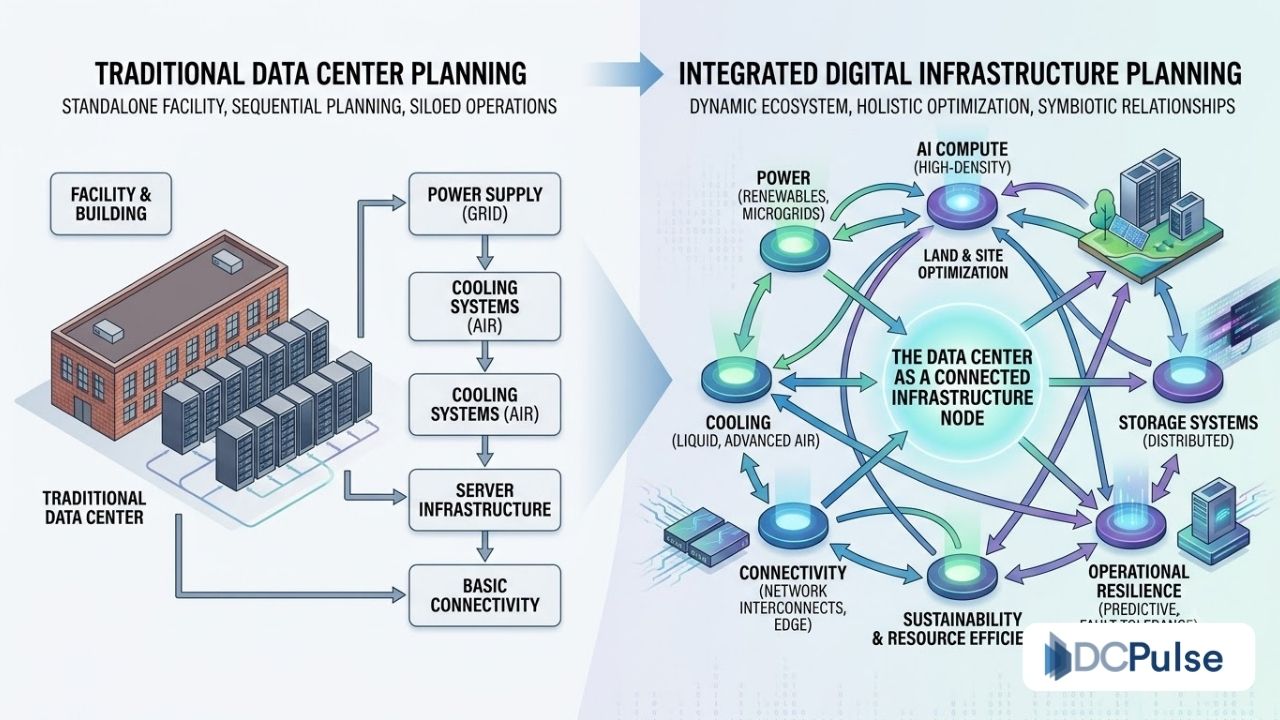
A new approach does not necessarily mean replacing existing infrastructure. It means treating the data center as part of a broader digital infrastructure system in which power, land, connectivity, compute, cooling, storage, and operational resilience are planned together.
AI Is Changing the Data Center Design Equation
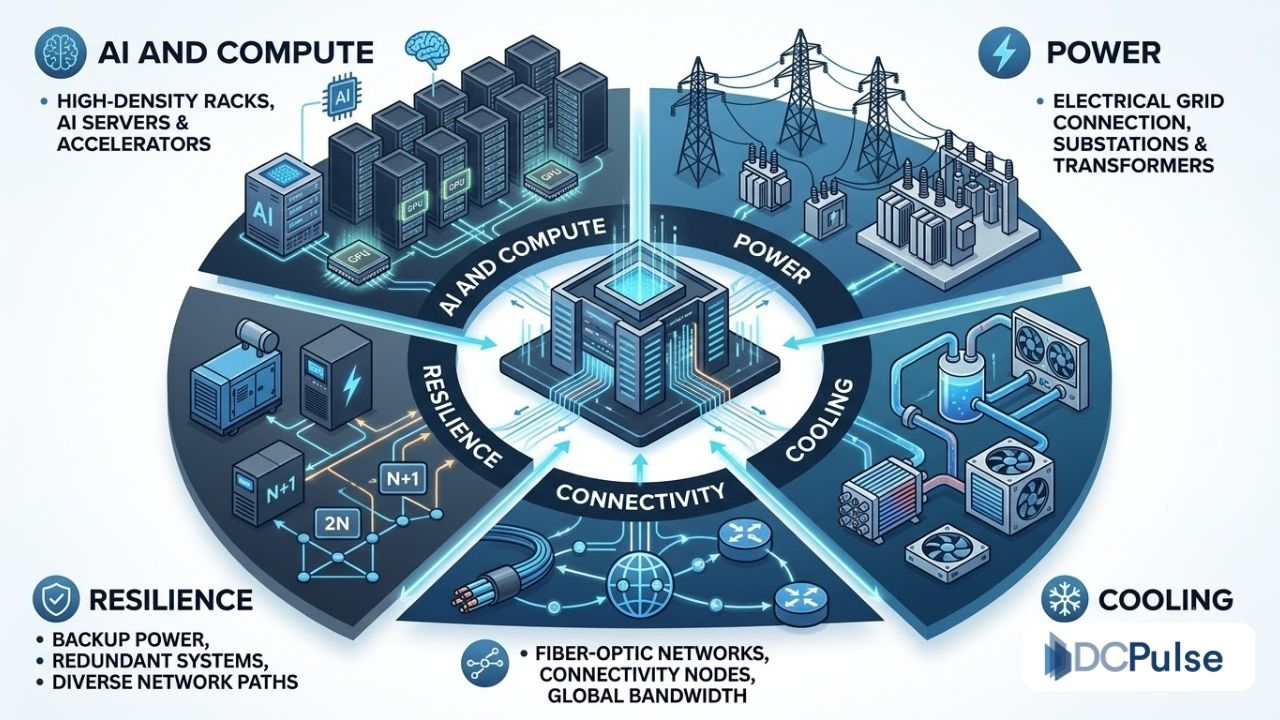
AI infrastructure is one of the clearest reasons the traditional approach is being reconsidered. High-performance computing environments place different demands on facilities compared with many conventional workloads, particularly in terms of rack density, power delivery, cooling, and network performance.
The physical design of a facility therefore becomes increasingly connected to the type of workload it will support. Power distribution, thermal management, rack configuration, network architecture, and equipment deployment can no longer be considered entirely separate decisions.
For operators, this creates a planning challenge. A facility needs to support current requirements while retaining enough flexibility to accommodate changes in computing architectures and customer demand.
That requirement places greater importance on modular designs, scalable electrical systems, adaptable cooling infrastructure, and infrastructure layouts that can accommodate changing technology without requiring major reconstruction.
Power Is Becoming a Core Infrastructure Constraint
Electricity has always been fundamental to data center operations, but the relationship between digital infrastructure and power is becoming more direct. A data center cannot expand simply because additional physical space is available if sufficient electrical capacity is not accessible.
Grid availability, transmission infrastructure, interconnection processes, power quality, and the timing of new generation can therefore influence where and when digital infrastructure projects can be developed.
The issue also extends beyond securing an initial power connection. Operators need to consider how facilities will maintain reliable operations as workloads increase and as additional computing capacity is deployed.
This environment encourages closer coordination between data center developers, utilities, energy providers, governments, and infrastructure investors. Digital infrastructure planning increasingly intersects with broader energy planning.
Cooling Needs to Be Designed Around Workloads
Thermal management is another area where infrastructure strategies are changing. Higher-density computing can produce substantially different heat profiles within a facility, making traditional cooling configurations less suitable for every deployment.
Air cooling remains an important technology across the data center industry, but liquid cooling is becoming increasingly relevant for workloads that require higher-density computing. Direct-to-chip systems, rear-door heat exchangers, and other approaches can provide operators with additional methods of managing heat.
The important consideration is not simply selecting a cooling technology. Water availability, facility design, maintenance requirements, equipment compatibility, energy consumption, and future workload requirements all influence the appropriate approach.
Data center projects therefore need cooling strategies that align with both present operating conditions and anticipated technology changes.
Connectivity Is Moving Closer to the Center of Infrastructure Planning
Data centers are also becoming increasingly dependent on high-performance connectivity. Cloud platforms, AI workloads, content delivery, enterprise applications, and distributed digital services all rely on networks that can move large volumes of data between facilities, users, cloud environments, and other infrastructure locations.
Connectivity considerations can influence site selection as much as physical real estate. Fiber availability, carrier diversity, network routes, internet exchange access, and proximity to other data center clusters can affect the long-term value of a facility.
For AI infrastructure, networking can become particularly important because computing resources may need to operate as coordinated systems rather than as isolated servers.
A new infrastructure approach therefore considers the data center as a node within a wider network rather than as a standalone building.
Location Decisions Are Becoming More Complex
Traditional data center site selection often emphasizes factors such as land, power, connectivity, taxation, and proximity to customers. Those considerations remain important, but the interaction between them is becoming more complicated.
A location with available land may not have sufficient power infrastructure. A site with strong grid access may face limitations related to transmission capacity or permitting. Another location may offer excellent connectivity but face constraints related to water availability, environmental requirements, or construction capacity.
The result is a broader site-selection process in which developers need to evaluate infrastructure dependencies collectively.
For large campuses, this approach can also influence expansion strategies. Securing sufficient land for future development is useful only when supporting power, connectivity, cooling, and other infrastructure can scale alongside the campus.
Resilience Needs to Extend Beyond the Facility
Data center resilience has traditionally focused heavily on redundancy within the facility. Backup power, redundant cooling, multiple network paths, and resilient electrical systems remain essential, but broader infrastructure dependencies also matter.
A facility can have redundant internal systems while still depending on external infrastructure that introduces operational constraints. Grid conditions, telecommunications routes, fuel supply, water systems, transportation networks, and regional infrastructure can all affect continuity.
This broader view of resilience is particularly relevant as data centers become more concentrated in major digital infrastructure hubs.
Operators and developers therefore need to consider resilience at both facility and ecosystem levels. Geographic diversity, network diversity, energy strategies, and supply-chain planning can become part of the same infrastructure conversation.
Data Centers Need More Flexible Development Models
The pace of technology change creates another challenge for long-lived data center assets. A building designed around one generation of computing hardware may remain operational for many years, while the technology installed inside it can change much faster.
Flexible infrastructure can help reduce this mismatch. Modular electrical systems, adaptable cooling designs, scalable network architecture, and configurable data hall layouts can provide greater options as customer requirements change.
This approach can also affect investment decisions. Developers may need to evaluate infrastructure not only according to its initial capacity but also according to how effectively that capacity can be adapted over the asset's operating life.
The objective is not to predict every future technology development. Instead, infrastructure can be designed with enough flexibility to accommodate multiple plausible operating requirements.
Sustainability Is Becoming an Infrastructure Question
Environmental considerations are increasingly connected to the physical design and location of data centers. Energy efficiency, renewable power procurement, water use, cooling efficiency, equipment lifecycle management, and construction impacts all form part of the infrastructure equation.
Sustainability strategies can therefore influence technical decisions rather than existing only as separate corporate initiatives.
For example, a cooling configuration can affect both energy and water requirements, while the availability of low-carbon electricity can influence the environmental profile of a facility. These factors can also interact with regulatory requirements and customer expectations.
A coordinated approach allows operators to evaluate these trade-offs during the planning stage instead of addressing them after infrastructure has already been established.
Why the Change Matters Now
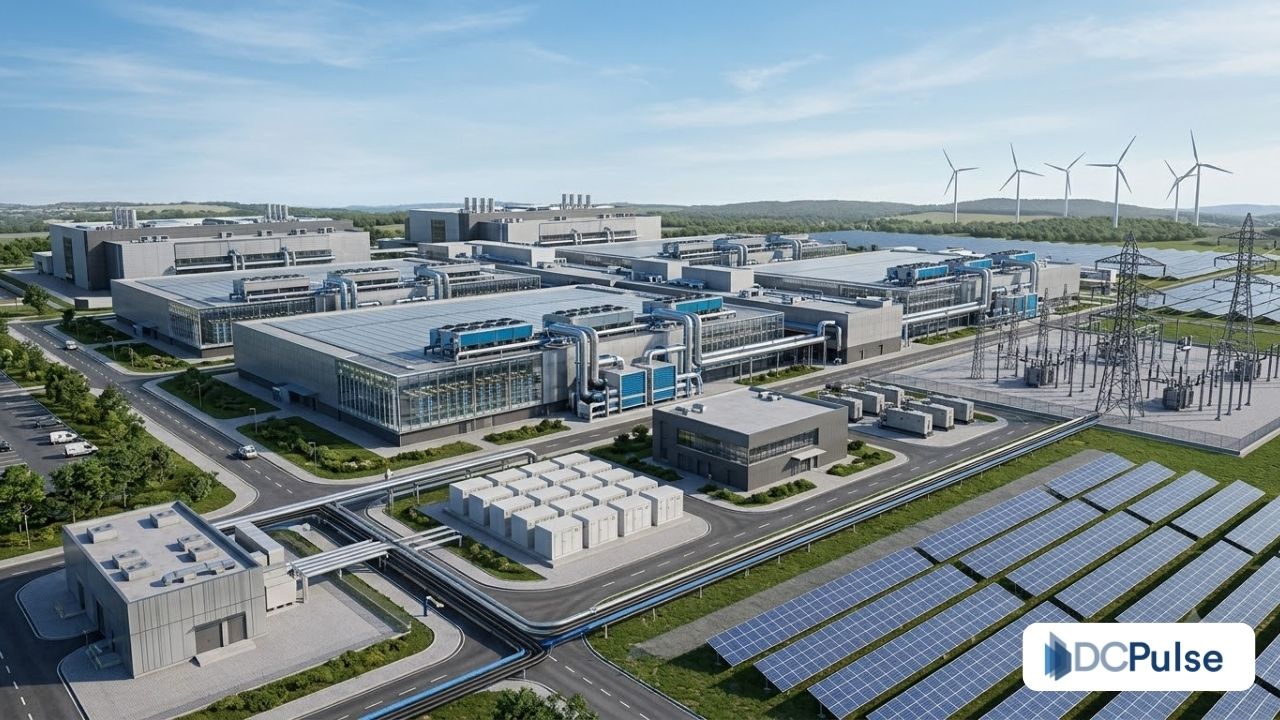
The need for a new approach is ultimately connected to the increasing interdependence of digital infrastructure systems. Computing capacity depends on electricity. High-density computing depends on effective thermal management. Cloud and AI workloads depend on networks. Data center expansion depends on land, construction capacity, grid infrastructure, and permitting.
Each component can become a constraint when it is planned independently of the others.
For the data center industry, the implication is a shift from facility-centric planning toward integrated infrastructure planning. The most important decisions increasingly occur before servers are installed, when developers determine where capacity can be built, how it will receive power, how heat will be removed, how users and other facilities will connect, and how the site can adapt to future requirements.
Digital infrastructure will continue to evolve as computing architectures, energy systems, networking technologies, and customer workloads change. A more integrated approach gives data center developers and operators a framework for managing those changes while reducing the risk that one infrastructure dependency becomes a barrier to the performance or expansion of the entire facility.