DCPulse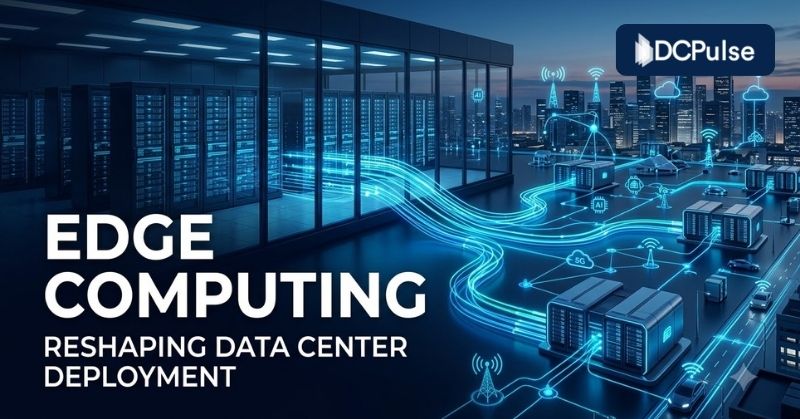
The edge data center market is projected to surpass $71.9 billion by 2035, reflecting the expanding role of distributed computing infrastructure in digital services. Edge facilities place computing and storage resources closer to users, devices, and data sources, creating an infrastructure model that complements centralized hyperscale and colocation data centers.
The market’s development is closely connected to the changing architecture of digital infrastructure. Applications increasingly depend on timely data processing across locations rather than relying exclusively on large centralized facilities. Edge data centers can provide localized infrastructure for workloads that require proximity to end users, connected devices, enterprise operations, or other data-generating environments.
For data center operators, the shift creates a broader deployment landscape in which smaller and geographically distributed facilities operate alongside conventional data center campuses.
Low-Latency Requirements Support Edge Infrastructure
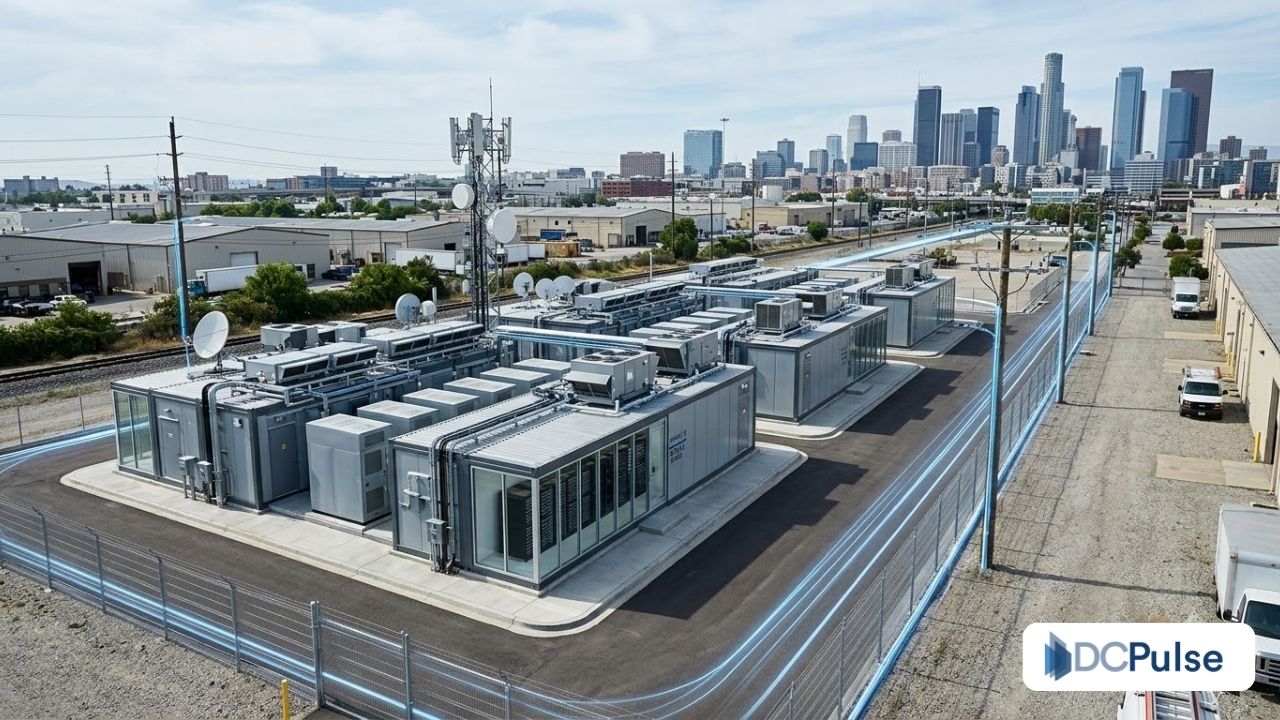
Latency-sensitive applications represent an important consideration in edge data center deployment. Autonomous systems, industrial applications, connected devices, telecommunications services, digital media, and real-time analytics can generate requirements for processing data closer to where it is produced or consumed.
Centralized facilities remain important for large-scale computing, storage, and cloud services, but distance between users and computing resources can affect application performance. Edge infrastructure provides an additional architectural option by moving selected workloads closer to the network edge.
The resulting model does not necessarily replace centralized infrastructure. Instead, edge facilities can function as an extension of broader data center and cloud architectures, with workloads distributed according to application requirements.
Distributed Data Centers Expand the Infrastructure Footprint
The expansion of edge computing changes the geographic profile of data center infrastructure. Traditional large-scale facilities often concentrate substantial computing capacity in locations with suitable power, land, connectivity, and network access.
Edge deployments can involve facilities in more distributed locations. These sites may include metropolitan areas, telecommunications locations, enterprise premises, industrial environments, and other locations where proximity to users or data sources is important.
Such distribution introduces additional infrastructure considerations. Operators must address power availability, cooling, physical security, network connectivity, remote management, maintenance, and operational resilience across a larger number of sites.
The economics and operational requirements of an edge facility can therefore differ significantly from those of a hyperscale campus. Standardized infrastructure and remote monitoring can become important for managing geographically dispersed deployments.
Network Infrastructure Becomes More Closely Integrated
Connectivity represents a fundamental component of edge infrastructure. Distributed computing locations require reliable links to users, telecommunications networks, cloud platforms, enterprise facilities, and centralized data centers.
The relationship between networking and computing becomes particularly important when workloads are divided across multiple infrastructure layers. An edge site may process time-sensitive information locally while sending selected data to a regional or centralized facility for additional analysis, storage, or long-term processing.
Fiber networks, 5G infrastructure, internet connectivity, and interconnection services can therefore influence the effectiveness of edge deployments. The availability of diverse and reliable network paths can also affect resilience and application performance.
For data center developers, network planning increasingly needs to account for the entire distributed architecture rather than a single facility.
AI Adds New Requirements for Distributed Computing
Artificial intelligence is introducing additional complexity into the edge infrastructure landscape. While large AI training workloads often require substantial centralized computing resources, inference and real-time AI applications can create demand for processing closer to users, devices, and operational environments.
Edge AI can involve applications in industrial operations, smart infrastructure, telecommunications, transportation, retail, healthcare environments, and other settings where data is generated continuously.
The infrastructure requirements vary according to the workload. Some applications may require local processing, while others can use a combination of edge computing and centralized cloud resources.
This hybrid architecture creates opportunities for data center operators to position computing capacity across multiple layers. Centralized facilities can provide large-scale computing and storage, while edge locations can handle workloads where proximity and responsiveness are important.
Power and Cooling Remain Critical at the Edge
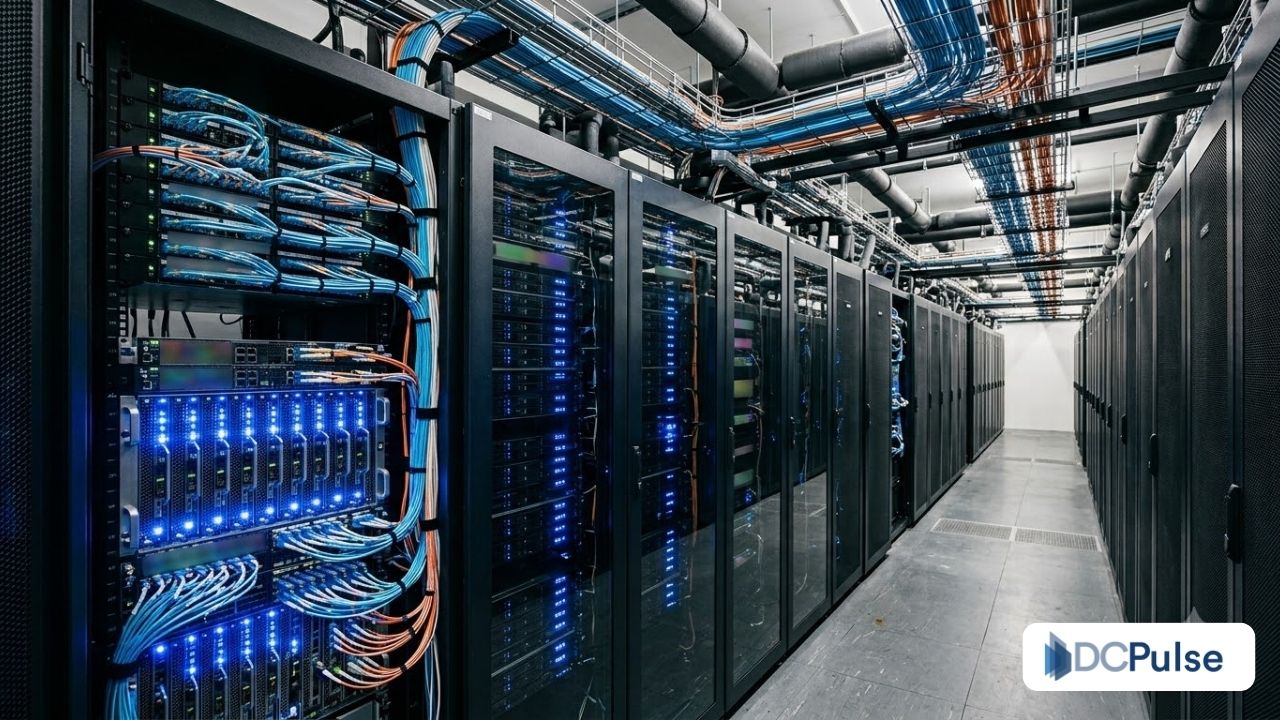
Power availability remains a fundamental requirement regardless of data center size. Edge facilities can face different power constraints from large centralized campuses because deployments may occur in locations where electrical infrastructure has been designed for telecommunications, commercial, or enterprise applications rather than high-density computing.
Cooling requirements also depend on the equipment configuration and workload. AI and other high-performance computing applications can increase rack-level power densities, creating additional thermal management requirements even within relatively compact facilities.
The resulting infrastructure challenge involves matching computing capacity with local power and cooling capabilities. Operators need to evaluate these factors at individual sites rather than assuming that infrastructure conditions are consistent across a distributed portfolio.
Data Center Operators Face New Operational Requirements
Distributed infrastructure introduces a different operating model for data center providers. A large campus can concentrate engineering, security, maintenance, and network operations within one physical environment. Edge deployments spread those responsibilities across multiple sites.
Remote monitoring and automated management can reduce the need for constant on-site intervention. Standardized hardware configurations and centralized operational platforms can also help operators manage facilities that are geographically dispersed.
Physical security becomes another consideration. Smaller edge sites may operate in locations with different security conditions from purpose-built data center campuses. Infrastructure design therefore needs to account for access controls, equipment protection, environmental monitoring, and operational continuity.
The ability to manage multiple facilities consistently can become an important component of an edge data center strategy.
Edge Data Centers Complement Hyperscale Infrastructure
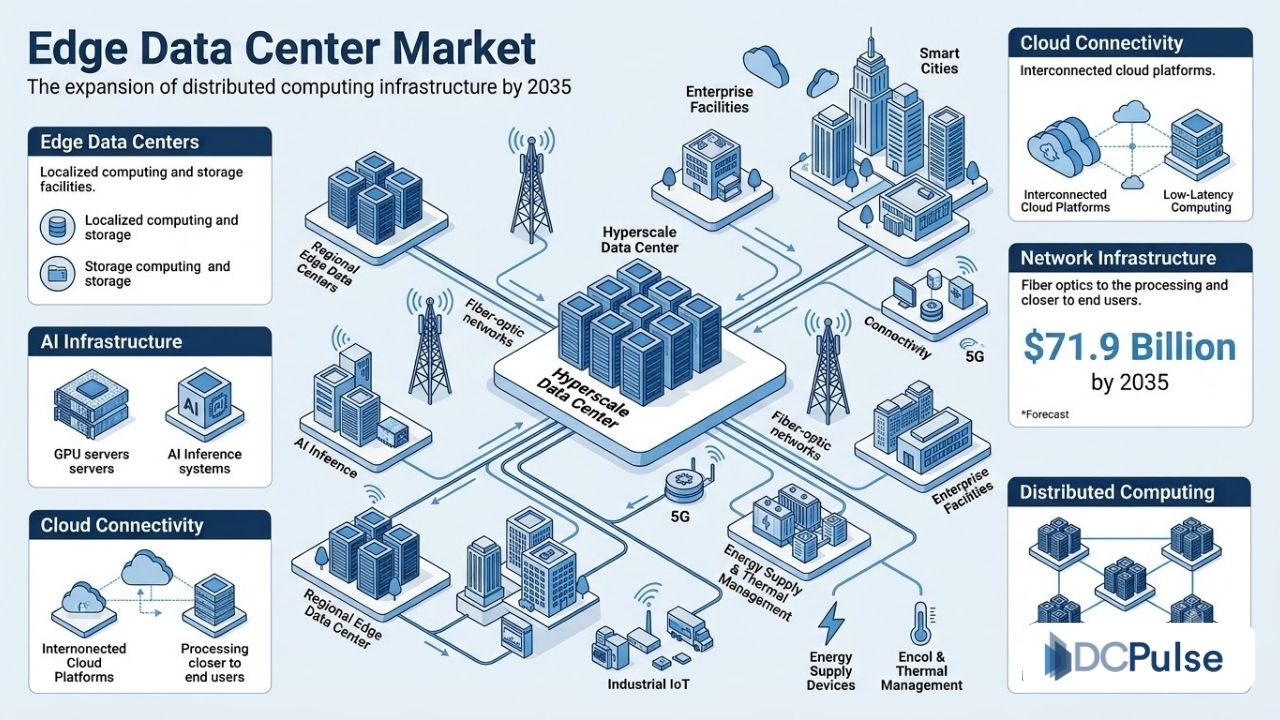
The projected expansion of the edge data center market does not indicate a straightforward shift away from hyperscale infrastructure. The two models address different but increasingly interconnected requirements.
Hyperscale and large colocation facilities remain suited to centralized cloud platforms, large-scale storage, intensive computing, and aggregation of substantial workloads. Edge facilities can extend these capabilities closer to users and data-generating environments.
A distributed architecture can therefore create multiple tiers of infrastructure. Data may move between edge locations, regional facilities, cloud platforms, and centralized data centers depending on latency, computing, storage, and application requirements.
This model can also influence network design. Greater interaction among infrastructure layers requires connectivity architectures capable of supporting data movement across geographically distributed locations.
Market Expansion Creates a Broader Data Center Ecosystem
The projected $71.9 billion-plus market opportunity by 2035 points to the increasing importance of edge infrastructure within the wider digital ecosystem. The trajectory is linked to the continued expansion of connected devices, real-time applications, distributed workloads, cloud services, and AI-enabled systems.
For the data center industry, the development of edge infrastructure broadens the definition of a computing facility. Infrastructure can increasingly range from large hyperscale campuses to smaller regional and localized sites that perform specialized roles within a distributed architecture.
The expansion also creates infrastructure planning challenges. Operators need to balance proximity with power availability, connectivity with resilience, and computing capacity with site-level operational requirements.
Edge data centers are consequently becoming part of a more interconnected digital infrastructure model. Their role will depend on how applications distribute computing between centralized and localized environments, while network, energy, cooling, and operational capabilities will remain central to determining where and how that infrastructure can be deployed.