DCPulse
AI data center development is increasingly becoming an electrical infrastructure challenge as much as a computing one. Large campuses require substantial amounts of power, but securing that electricity depends on a chain of transmission lines, substations, transformers, switchgear, and interconnection equipment that must be available before servers can operate.
At the center of that chain is the power transformer. The equipment converts electricity between voltage levels, allowing power to move efficiently through transmission and distribution networks and ultimately reach a data center. As AI campuses become larger and more power-intensive, transformer availability is becoming an important factor in the timing, design, and location of new facilities.
The term “super-grid transformer” is best understood as a description of the increasingly important role of large, high-voltage transformer infrastructure rather than a single standardized transformer technology. The broader shift is toward electrical systems capable of connecting very large loads to increasingly complex power networks.
AI Is Changing the Data Center Power Equation
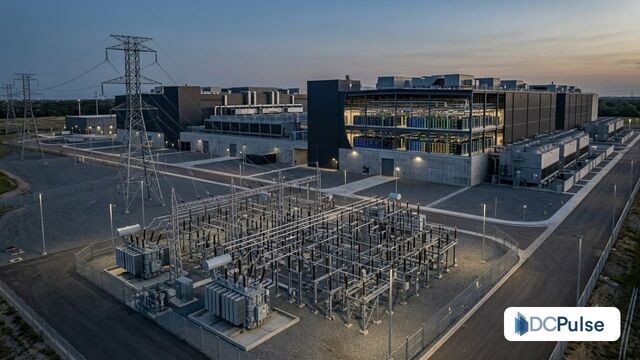
Traditional data centers already require dependable electricity, but AI infrastructure introduces a different operating profile. GPU-intensive computing can concentrate substantial electrical demand within relatively compact facilities, while the rapid expansion of AI campuses is encouraging developers to pursue larger power connections.
That change is affecting utility planning. Grid operators and utilities are increasingly evaluating data center projects not simply as another commercial load but as major additions to local and regional electricity demand. Transmission capacity, substations, and transformers therefore become part of the development schedule rather than background infrastructure.
For data center developers, the consequence is straightforward: a site with suitable land and fiber connectivity is not necessarily a site that can receive power quickly enough to support an AI campus.
Transformers Are Becoming a Development Constraint
Transformer supply has become an important issue across the electricity sector. A 2024 U.S. National Infrastructure Advisory Council report identified extended transformer lead times and linked demand pressures to electrification, renewable generation, and large loads, including data centers.
Recent industry reporting indicates that the situation remains significant in 2026. Reuters reported that some U.S. high-voltage transformer lead times have reached multiple years, prompting utilities and developers to place orders earlier, refurbish equipment, and seek additional suppliers.
For a data center project, a transformer delay can have consequences beyond the electrical package itself. Building work may continue while the facility waits for grid equipment, creating a mismatch between construction completion and available power. The result can be a facility that is physically ready but unable to energize its planned IT capacity.
The Grid Connection Is Becoming a Strategic Decision
The transformer issue also changes how developers approach site selection. Power availability increasingly needs to be assessed alongside land, network connectivity, cooling resources, and permitting conditions.
A location close to a major transmission corridor may offer advantages, but proximity alone does not guarantee available interconnection capacity. The condition of existing substations, available transformer capacity, transmission constraints, and the utility's planned upgrades all influence whether a proposed data center can receive the required power.
That consideration is particularly important for AI campuses, where developers may plan capacity in phases. A site may initially require one level of power and later need substantially more as additional computing halls are commissioned. Transformer and substation planning therefore needs to account for the expected buildout rather than only the first phase.
Advanced Transformers Support a More Flexible Grid
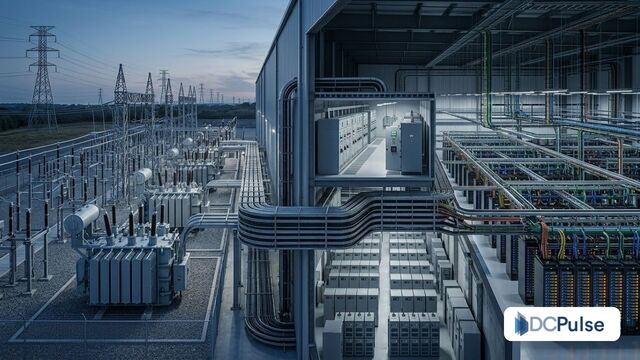
The transformer itself is also becoming part of a broader technology transition. Conventional transformers remain fundamental to grid operation, while newer power-conversion approaches are being explored for applications where faster control and bidirectional power flows are valuable.
The American Society of Heating, Refrigerating and Air-Conditioning Engineers, for example, identifies solid-state transformers and bidirectional converters as technologies that can support grid-interactive data center designs. Such architectures could allow data centers to coordinate electricity consumption more actively with grid conditions.
These technologies do not eliminate the need for conventional high-voltage grid infrastructure. Instead, they add another layer of control between the grid and increasingly dynamic computing loads.
For data center operators, that distinction matters. Reliability still depends on the physical power network, while advanced conversion and control systems can influence how electricity is delivered, managed, and potentially shifted within the facility.
AI Makes Electrical Architecture More Important
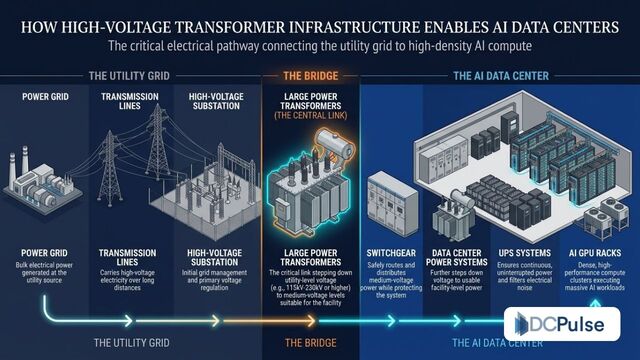
The transformation extends inside the data center. Power must travel from the utility connection through transformers, switchgear, UPS systems, and distribution equipment before reaching computing hardware.
AI infrastructure places greater emphasis on this complete power path because high-density computing environments can make electrical losses, thermal management, and power quality more consequential to facility design.
Recent technical research has consequently begun treating AI data centers as grid-interactive electrical systems rather than passive electricity consumers. Research published in 2026 examines architectures spanning the grid connection through facility-level converters and rack-level power systems, including higher-voltage DC distribution and solid-state transformers.
The direction suggests closer coordination between utility infrastructure and data center electrical design.
Supply Chains Could Influence Where AI Gets Built
Transformer availability is also becoming a factor in the geography of digital infrastructure. When electrical equipment requires long manufacturing and delivery periods, developers have stronger incentives to identify power infrastructure early and secure equipment before construction reaches later stages.
McKinsey describes the current transformer market as a structural supply-demand shift driven partly by electricity demand from data centers and electrification. Its analysis notes that transformer shortages can affect interconnection queues and delay grid expansion.
This creates a potential competitive advantage for regions with established transmission infrastructure, available manufacturing capacity, coordinated utility planning, and clearer pathways for large-load connections.
For hyperscalers and data center developers, the question is therefore moving beyond “Where can we build?” toward “Where can we obtain reliable power infrastructure on the required schedule?”
A New Layer of Data Center Infrastructure Planning
The transformer revolution is unlikely to be visible to most data center users. Servers, GPUs, networking equipment, and cooling systems remain the more recognizable components of digital infrastructure. Yet the electrical equipment outside and inside the facility increasingly determines how quickly that computing capacity can become operational.
AI is bringing this issue into sharper focus. Grid expansion, transformer manufacturing, substation design, and data center electrical architecture are becoming interconnected parts of the same development equation.
The next phase of data center growth will therefore depend not only on acquiring land, chips, and cooling capacity. Access to transformers and the grid infrastructure surrounding them may become one of the critical prerequisites for turning AI capacity plans into operating facilities.