DCPulse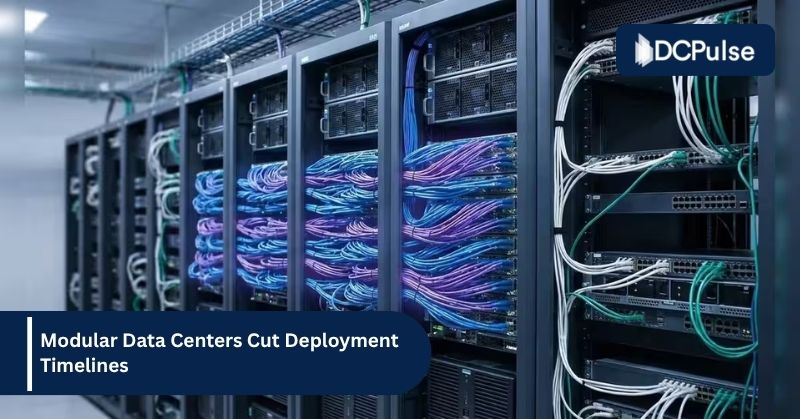
Artificial intelligence is changing the performance expectations placed on data centers and digital infrastructure. AI training, inference, model development, and data-intensive applications require infrastructure that can support high compute density while maintaining reliable power, cooling, networking, and storage operations.
The challenge is not limited to adding more servers. AI infrastructure requires coordination across multiple layers of the data center, from utility connections and electrical systems to high-speed interconnects and thermal management. The ability to deploy capacity quickly is becoming increasingly important as organizations move from experimental AI projects toward larger production environments.
For data center operators, this creates a balance between speed and scale. Rapid deployment can help address emerging demand, but infrastructure decisions also need to accommodate changing hardware requirements, power constraints, and workload characteristics.
Power Availability Has Become a Deployment Constraint
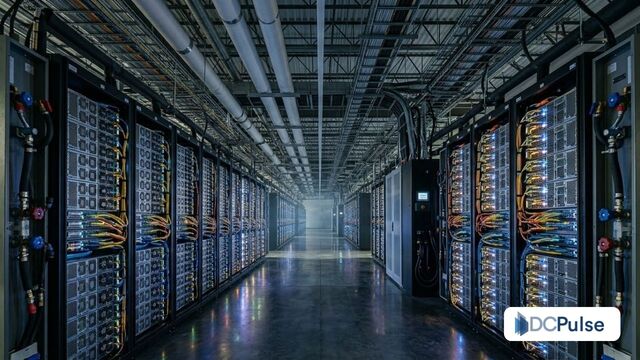
Power infrastructure remains one of the most important considerations for AI-oriented data center development. Higher-density compute environments can place greater demands on electrical distribution systems, while new facilities may face lengthy processes for securing utility capacity and developing supporting infrastructure.
The availability of power can therefore influence where AI data centers are built and how quickly capacity can become operational. Locations with established transmission infrastructure, available generation capacity, and suitable utility relationships can offer advantages during development.
Grid interconnection timelines also create planning challenges. A data center project can progress through land acquisition, design, and equipment procurement while still depending on electrical capacity that may take longer to become available.
This situation increases the importance of power planning at the earliest stages of data center development. Operators and developers need visibility into both immediate requirements and potential future expansion rather than treating electricity as a final-stage infrastructure consideration.
Cooling Architecture Must Adapt to Higher Density
Thermal management is another critical element of AI infrastructure. Conventional data center cooling strategies were developed around equipment configurations that can differ substantially from the high-density environments associated with modern AI computing.
GPU-intensive systems can concentrate substantial heat within relatively small areas. That concentration changes requirements for cooling distribution, rack design, facility plumbing, heat rejection, and monitoring.
Liquid cooling is consequently receiving greater attention in high-density deployments. Depending on system design, direct-to-chip cooling and other liquid-based approaches can provide a pathway for managing thermal loads that may be difficult to address through air cooling alone.
The shift also introduces additional infrastructure considerations. Water systems, coolant distribution, heat exchangers, pumps, maintenance procedures, and facility layouts all need to be considered as part of the overall data center architecture.
For operators, cooling strategy is increasingly connected to deployment speed. A facility designed around one thermal architecture may require additional engineering and equipment changes when AI hardware specifications evolve.
Networking Has Become Central to AI Infrastructure
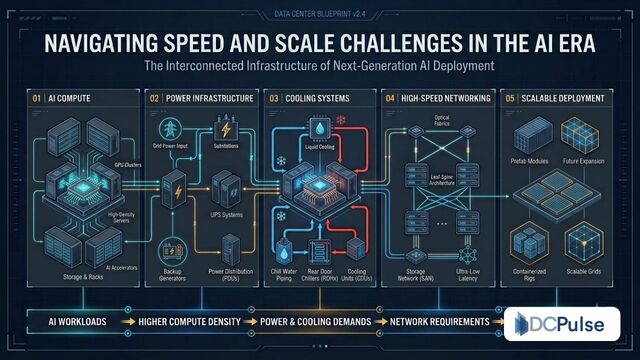
AI computing also places significant demands on internal data center networks. Training environments can involve large numbers of accelerators operating together, making communication between compute resources an important component of overall infrastructure performance.
High-speed networking, low-latency interconnects, switching capacity, and network architecture therefore form a critical part of AI data center planning. Network bottlenecks can affect how efficiently expensive compute resources operate, particularly when workloads require frequent movement of data between processors and storage systems.
The implications extend beyond the server hall. Fiber connectivity and diverse network routes remain important for facilities supporting cloud services, enterprise applications, and distributed AI workloads.
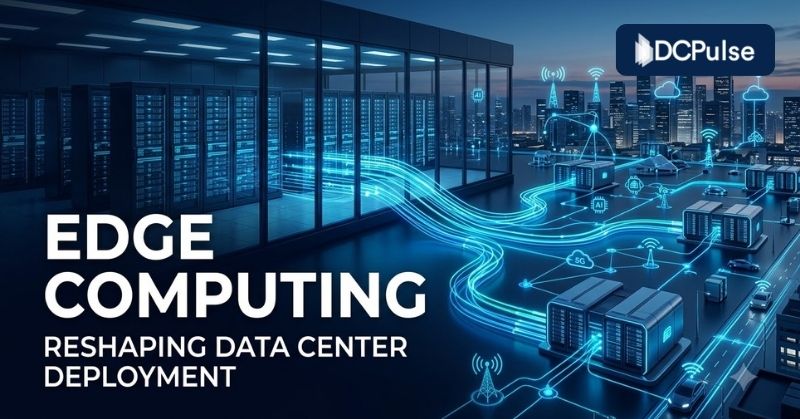
Edge and regional infrastructure can also play a role as inference workloads move closer to users and data sources. A more distributed AI environment could increase the importance of interconnected data center locations rather than relying exclusively on a small number of large facilities.
Speed-to-Market Is Becoming a Strategic Consideration
The pace of AI development creates pressure for infrastructure providers to shorten the time between capacity planning and deployment. Traditional data center projects can involve lengthy processes covering site selection, permitting, power development, construction, equipment procurement, and commissioning.
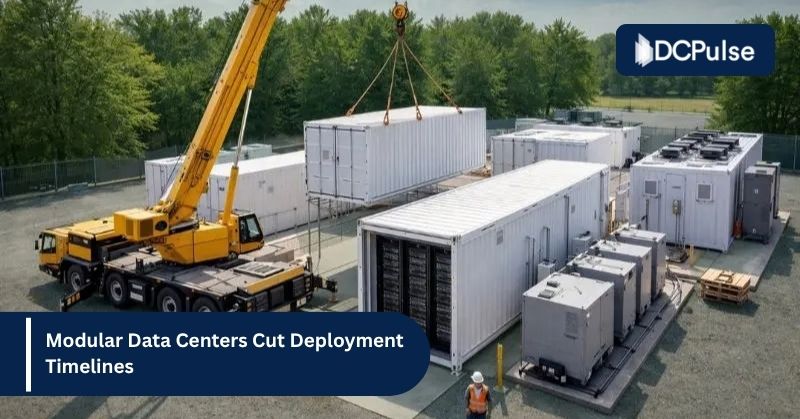
Modular construction and standardized infrastructure can provide potential ways to reduce complexity in selected deployments. Prefabricated electrical and mechanical systems, standardized data halls, and repeatable designs can support more consistent project execution.
The suitability of these approaches depends on project requirements, site conditions, power availability, and the intended workload. Speed cannot be considered independently of reliability and long-term operational requirements.
A faster deployment that creates limitations in power expansion, cooling capacity, or network architecture could constrain future growth. Data center developers therefore face a broader optimization problem: infrastructure needs to become available quickly without sacrificing the flexibility required by rapidly changing AI workloads.
Scale Requires More Than Larger Data Halls
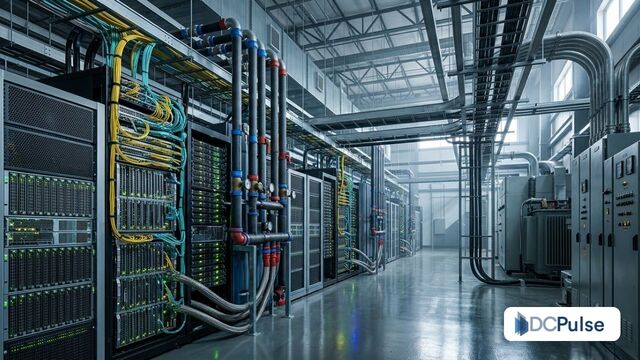
AI infrastructure discussions often focus on increasing capacity, but scaling data centers involves multiple interconnected systems. Additional compute capacity requires corresponding increases in electrical distribution, cooling, networking, storage, physical space, and operational capability.
The expansion model also affects infrastructure planning. A campus approach can provide opportunities for phased development, allowing capacity to be added as demand materializes. However, the underlying site must be capable of supporting future expansion in areas such as power delivery, cooling systems, fiber connectivity, and physical security.
Long-term scalability can therefore influence site selection as much as current capacity. Developers need to evaluate whether a location can support future infrastructure requirements rather than assessing only the initial building.
Supply Chains Add Another Layer of Complexity
AI infrastructure deployment depends on a wide range of equipment, including servers, accelerators, networking systems, power equipment, cooling technologies, generators, transformers, switchgear, and related components.
Procurement timelines can affect construction schedules when critical equipment is unavailable or requires extended lead times. Coordination between equipment suppliers, contractors, utilities, and data center operators becomes particularly important when multiple infrastructure systems must be commissioned together.
Standardization can help reduce some deployment complexity by allowing organizations to repeat proven configurations. At the same time, rapid changes in AI hardware can create pressure to maintain flexibility rather than locking facilities into designs optimized for a single generation of technology.
Digital Infrastructure Is Moving Toward Greater Flexibility
The AI era is placing data centers at the intersection of computing, energy, cooling, and telecommunications infrastructure. The resulting requirements are broader than simply providing additional floor space for servers.
Infrastructure flexibility is becoming increasingly relevant as workload profiles evolve. Training and inference can have different resource requirements, while AI applications can operate across centralized hyperscale facilities, regional cloud environments, and edge locations.
This evolution creates opportunities for data center operators to rethink capacity planning around infrastructure readiness rather than only physical expansion. Power availability, cooling capability, network connectivity, and equipment compatibility all influence how effectively a facility can respond to changing demand.
Balancing Immediate Demand With Long-Term Resilience
The central challenge for AI infrastructure is balancing speed with sustainable scalability. Organizations need capacity quickly, but infrastructure decisions made under short-term pressure can influence operational flexibility for years.
Data centers capable of supporting higher-density computing while maintaining reliable power, effective thermal management, strong network connectivity, and expansion options will be better positioned to accommodate changing AI requirements.
The resulting infrastructure strategy is less about building as quickly as possible and more about building with the right combination of speed, capacity, adaptability, and resilience. As AI adoption expands across cloud, enterprise, and digital services, these factors will increasingly shape how data center campuses are designed, developed, and operated.